Wings Over the Coast: Butterflies as Pollinators in Brunswick County, North Carolina
Why Butterflies Matter More Than You Think
When most people think of pollinators, honeybees come to mind first. But butterflies are essential, often-overlooked partners in the pollination story — particularly along North Carolina's southeastern coastal plain. In Brunswick County, where our climate bridges the Piedmont and the coast, butterflies play a vital and distinctive ecological role that no other pollinator fills quite as well.
Butterflies pollinate by accident and by design. As they probe flowers for nectar, pollen clings to their legs, bodies, and proboscises, transferring from bloom to bloom. Unlike bees, which forage methodically in tight clusters, butterflies travel longer distances between feeding stops — sometimes hundreds of yards. This makes them critical for cross-pollination of native wildflowers spread across Brunswick County's mosaic of pocosin wetlands, longleaf pine savannas, maritime shrub thickets, and residential gardens.
Butterflies also serve as sensitive ecological indicators. Their presence — or absence — reflects the overall health of local plant communities, pesticide loads, and habitat connectivity. A yard or garden that supports diverse butterflies is, by definition, a healthy, functioning ecosystem.
Brunswick County: A Butterfly Crossroads
Brunswick County sits at a remarkable ecological intersection. Our mild winters allow species like the Gulf Fritillary and Zebra Longwing to persist year-round or overwinter successfully — something impossible just two counties inland. The county lies directly along the Atlantic Flyway, meaning it receives migrating Monarchs each fall as they funnel down the coast toward their Mexican overwintering grounds. The proximity to coastal wetlands also supports unusual species like the Palamedes Swallowtail, found primarily in swampy southeastern habitats where its larval host, Red Bay, still persists despite Laurel Wilt disease pressure.
Our region hosts over 100 butterfly species regularly, including several that depend on plants that gardeners can provide. The butterflies most likely to visit Brunswick County gardens include:
Eastern Tiger Swallowtail — North Carolina's state butterfly; abundant spring through fall
Spicebush Swallowtail — dark velvet wings; common in woodland edges
Gulf Fritillary — brilliant orange; year-round resident, especially near passionflower
Monarch — iconic migrant; needs milkweed to breed and goldenrod to fuel migration
Painted Lady — wide-ranging migrant; visits countless flower types
Pearl Crescent & Variegated Fritillary — small but numerous in sunny gardens
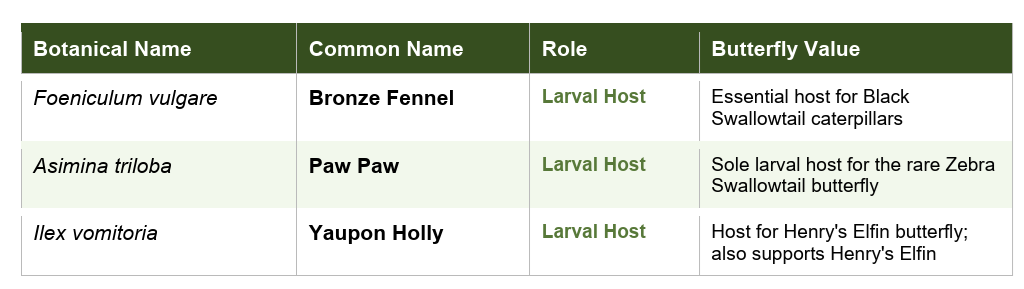
Zebra Swallowtail — Brunswick County specialty; needs Paw Paw to survive
Cloudless Sulphur — brilliant yellow; peaks in fall migration along the coast
Nectar Plants vs. Larval Host Plants: Both Are Essential
A garden designed only for nectar is like a restaurant with no nursery — adults can eat, but the next generation cannot survive. Healthy butterfly populations require two types of plants working in tandem:
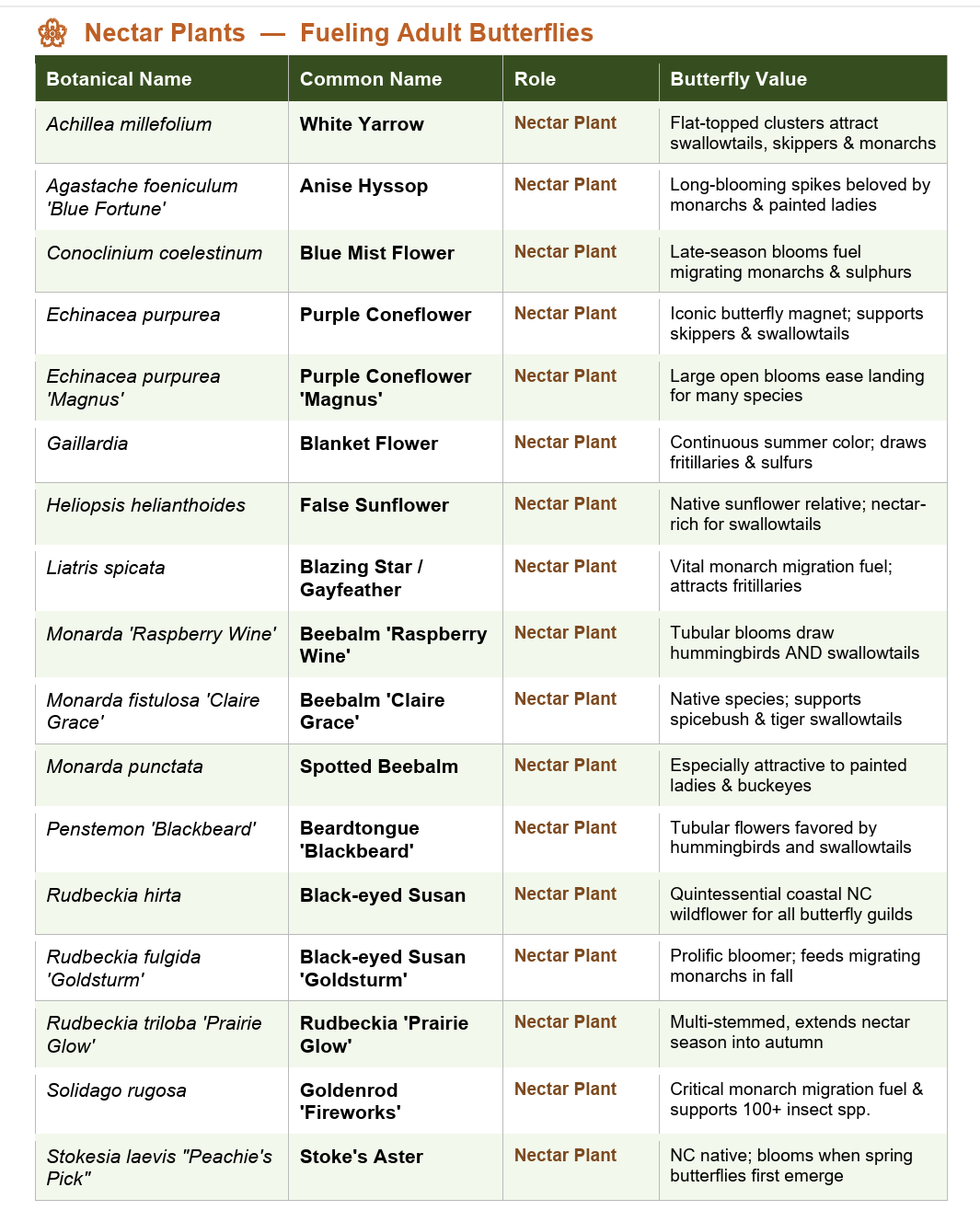
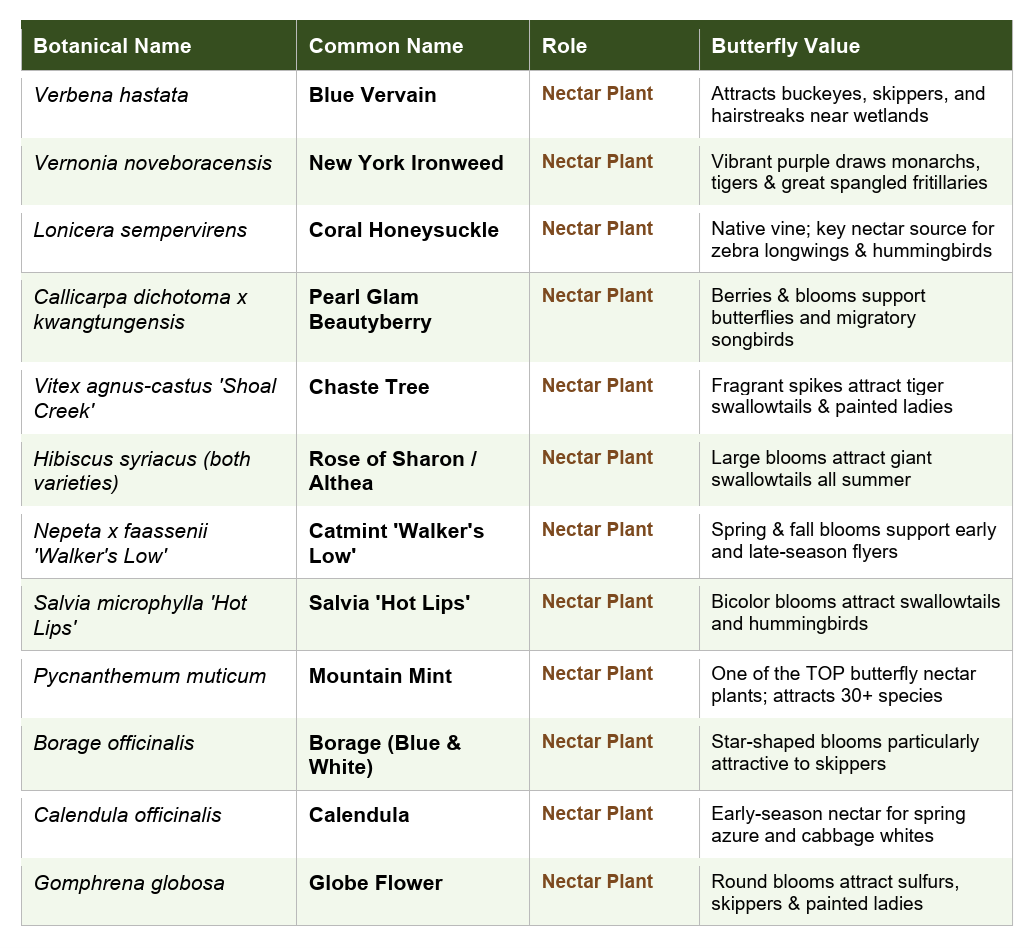
Nectar Plants provide the sugary fuel that adult butterflies need to fly, mate, and migrate. The best nectar plants for Brunswick County bloom across multiple seasons — early spring through hard frost — and offer accessible flower shapes. Native species are far superior to cultivars with double blooms, which often have reduced nectar.
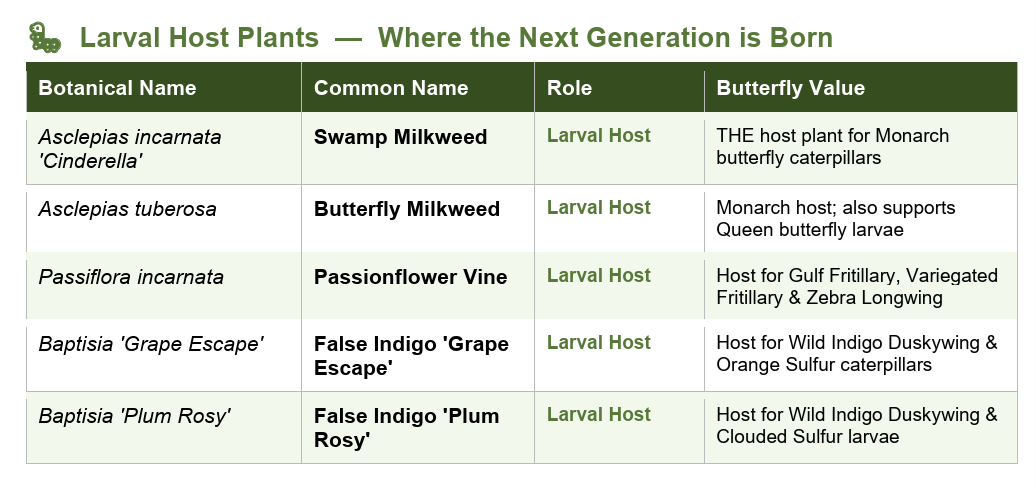
Larval Host Plants are the specific plants where female butterflies lay their eggs and where caterpillars feed. The relationship is often highly specialized — the Monarch uses only milkweed; the Zebra Swallowtail uses only Paw Paw; the Gulf Fritillary relies on Passionflower. Without host plants, reproduction is impossible, and local populations eventually collapse.
The good news: many plants featured at this sale serve both functions, or are so ecologically critical that planting even one makes a measurable difference for local butterfly populations.
Sources: NC State Extension, North American Butterfly Association, Xerces Society, NC Native Plant Society — Brunswick County Chapter

NC State University is an equal opportunity institution