Native or Non-Native - What’s the Difference?
If you have been a partner with us at the Brunswick County Cooperative Extension and the Extension Master Gardener℠ Volunteer Association by attending workshops, reading our online materials, or participating in our plant sales, you know that we support the use of native plants. As we prepared for this Spring 2026 Online Plant Sale, the native values of plants were truly significant. Our theme for this sale is Exploring Our Colonial Roots: Grow the Past, Sustain the Future and we have selected a variety of plants for the sale which were present in our region at the time the European colonists settled here. That’s native!
We thought it might be helpful to review the differences between native and non-native plants, so we can be better educated consumers. To do this, we turned to the North Carolina Extension Gardener Handbook.¹ Below is the information you need to understand the difference taken directly from this resource. We have removed the hyperlinks for the individual plants which are mentioned but have maintained the links to the databases which are also a valuable resource.
What Are Native Plants?
Native plants are those species that evolved naturally in a region without human intervention. Red maple (Acer rubrum), flowering dogwood (Cornus florida), and butterfly weed (Asclepias tuberosa) are examples of the over 3,900 species of plants the U.S. Department of Agriculture (USDA) PLANTS Database lists as native to North Carolina. These plants developed and adapted to local soil and climate conditions over thousands of years and are vital parts of local ecosystems necessary for the survival of pollinators, insects, birds, mammals, and other wildlife.
Plants are not considered native to a region within decades or even centuries after introduction. To be native, they must originate in the region and co-evolve with other species over thousands of years. As these species evolve together, they adapt to the physical environment formed by local climate and weather conditions, soil types, topography, and hydrology.
Native plants form interdependent, highly specialized relationships with other organisms that are necessary for each other’s survival. Replacing natives with plants from other regions cannot replicate the complex interactions that naturally occur. Native plants provide the base of the food web – they capture and convert the sun’s energy into a form that can be consumed by other organisms.²
Coastal Native Plants Available Through our Online Plant Sale
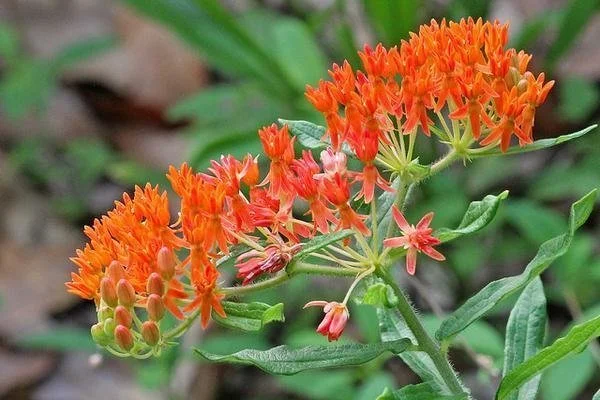
Asclepias tuberosa, Mary Keim CC BY-NC-SA 2.0

Helianthus angustifolius Eleanor CC BY-NC 2.0

Liatris Spicata, Form, Hedwig Storch CC BY-SA 3.0
Naturalized and Invasive Plants
Not all plants growing wild in a region are natives. Nonnative, or exotic, plants that reproduce and establish outside their native range are described as naturalized. According to the USDA PLANTS Database, over 1,100 species of naturalized plant species grow in North Carolina. Examples include many common weeds and wildflowers, such as chickweed (Stellaria media), white clover (Trifolium repens), Queen Anne’s lace (Daucus carota), and orange daylily (Hemerocallis fulva), all of which were introduced from Eurasia.
Weeds are nuisance plants that interfere with human activities, such as farming, gardening, and turf maintenance. When cultivated areas are abandoned, most common lawn and garden weeds disappear after a few years, allowing native plants and the many wildlife species that rely upon them to re-establish.
A small percentage of plants introduced to North Carolina have become exceptionally persistent and damaging. These extra-aggressive nonnative species, capable of invading natural areas and destroying ecosystems, are known as invasive species. The USDA’s National Invasive Species Information Center characterizes invasive species as adaptable, aggressive, and having a high reproductive capacity. Because they did not evolve locally, invasive species lack the natural enemies that limit aggressive spreading in their native habitat, resulting in rampant, uncontrolled population growth that can threaten the health of humans, livestock, wildlife, and ecosystems.
Invasive species are one of the greatest threats to ecosystems worldwide. Many invasive plants in the United States were originally introduced for agricultural or ornamental use. For example, kudzu (Pueraria montana var. lobata) was introduced to the Southeast in the 1930s for erosion control and animal fodder. Invasive plant species that were introduced as landscape plants, but have become too well-adapted to local conditions, include Japanese honeysuckle (Lonicera japonica), autumn olive (Eleagnus umbellata), Chinese privet (Ligustrum sinense), English ivy (Hedera helix), and Asian wisterias (Wisteria floribunda and Wisteria sinensis).
Exotic plants are most likely to become invasive in regions with soil and climate conditions similar to those of their native habitat. Plant species that are invasive in one ecoregion of the state may not be invasive in others. For example, the invasive species Oriental bittersweet (Celastrus orbiculatus) is particularly problematic in the Blue Ridge Mountains, but not in the NC coastal plain.
One of the most important things gardeners can do to protect local ecosystems is to identify and remove invasive plants from their property and avoid planting species that have a high potential to become invasive. Resources to help gardeners and landowners in North Carolina identify and manage invasive plants are available from the NC Invasive Plant Council, NC Native Plant Society, and NC Forest Service.
For further information on native plants, go to: https://gardening.ces.ncsu.edu/gardening-plants/native-plant-resources/
Sources:
¹NC State Extension (Eds.). (2022). North Carolina Extension Gardener Handbook: Second Edition. NC State Extension (Distributed by The University of North Carolina Press). Retrieved at https://content.ces.ncsu.edu/extension-gardener-handbook/12-native-plants#section_heading_8872
²Glen, Charlotte, (2018). NC State Extension (Eds), NC Native Plants for Coastal Landscapes. PowerPoint Presentation. Retrieved at https://gardening.ces.ncsu.edu/wp-content/uploads/2018/02/2018CarteretSymposium.pdf?fwd=no

NC State University is an equal opportunity institution