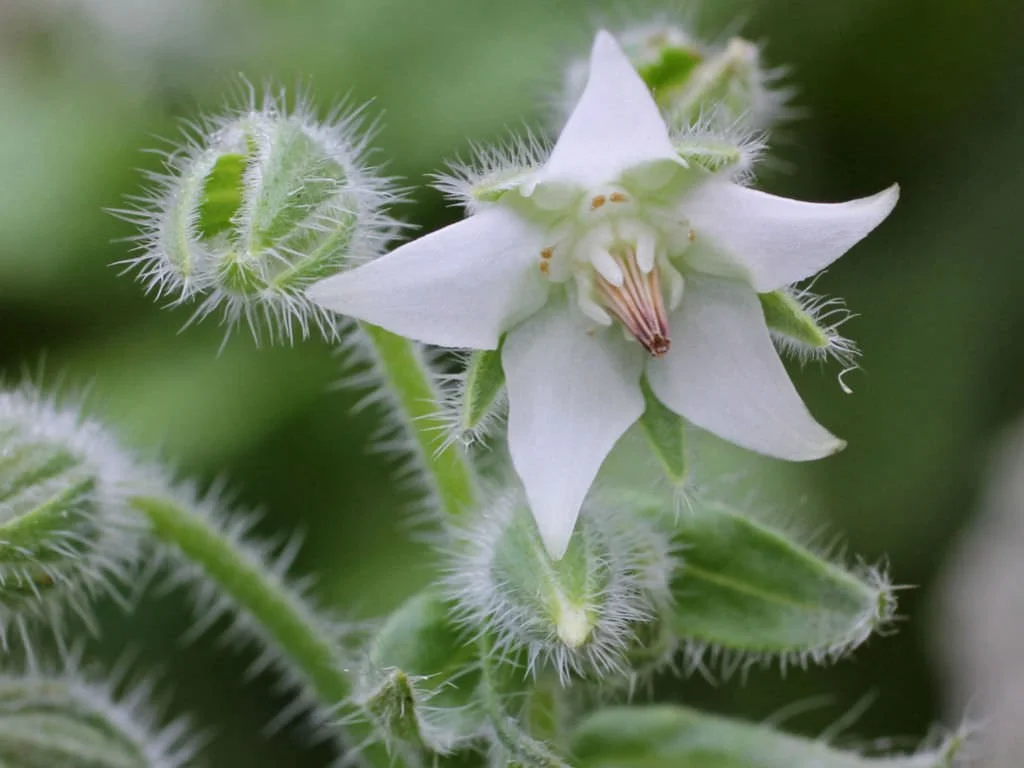
 Image 1 of 2
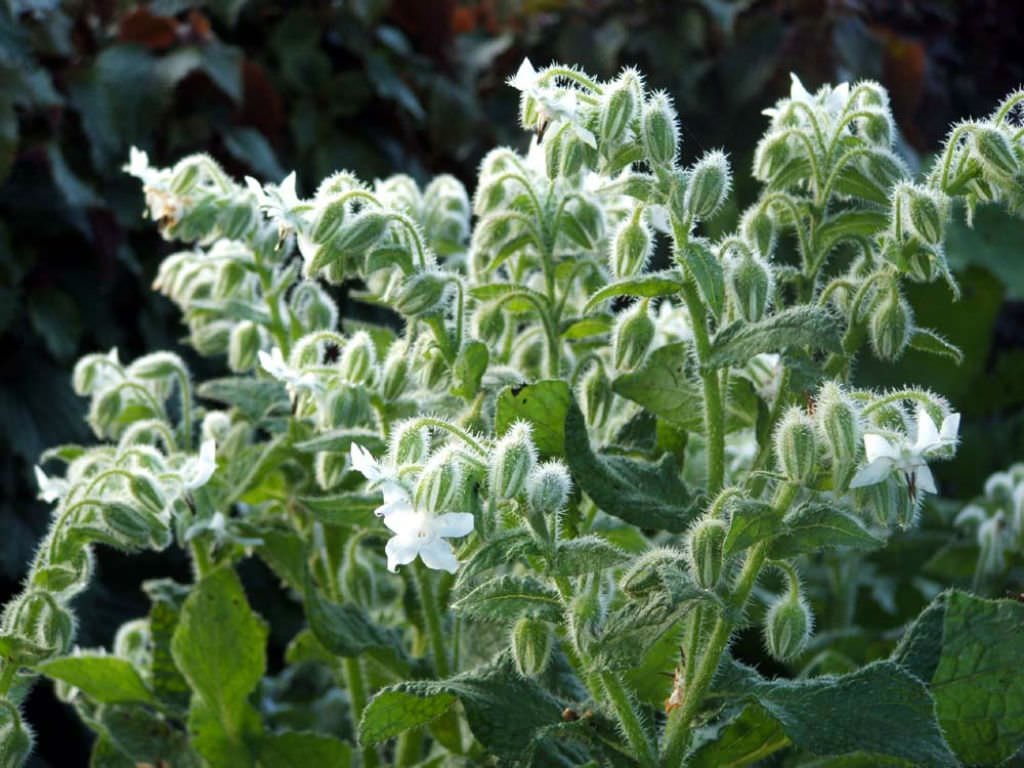 Image 2 of 2
Pot Size: 1 quart
Native Status: Cultivar
Description: Pure white, star-shaped flowers are centered by five back stamens and bloom from summer through fall. This cultivar is identical in growth habits to its blue counterpart, Borago officinalis. This cultivar has stalks that are sturdier and blooms later in season than its blue cousin. The wrinkled, dull gray-green leaves that are covered with bristly hairs are edible but need to be used sparingly. Plant leaves taste like cucumber. This plant grows at its best in full sun but will not be adversely affected by light shade. It will do well in all types of soil, including nutritionally poor soil. Note: Borage is toxic to cats if digested.
Light Exposure: Full sun Drought Tolerant: Yes
Soil Moisture: Dry well drained Salt Tolerant: Moderately
Mature Height: 1 ft 7 in - 3 ft Deer Resistant: Yes
Mature Width: 1 ft – 1.5 ft
Bloom Color/Bloom Time: White flowers blooming summer through fall.
Historical Uses: Used for cooking both past and present. Both flowers and leaves can be used in salads, drinks, and other dishes. The tender leaves may be eaten raw or cooked like spinach. Leaves lose their flavor when dried. First record in America 1753.
Wildlife Values: High-value, bee-friendly plant that produces copious, rapidly replenishing nectar, making it a critical resource for bumblebees, honeybees, and beneficial insects like hoverflies and parasitic wasps.
👉 For more information visit NC Extension Gardener Plant Toolbox
The information provided here is for educational and informational purposes only and is not intended as medical advice. Medicinal plants can have serious side effects and interactions with medications. Consult your healthcare provider before using any herbal remedies, as you are responsible for your own health decisions.
Photo Credits:
1- Borago officinalis ‘Alba’ (white borage), courtesy of World of Flowering Plants
2- Borago officinalis ‘Alba’ (white borage), courtesy of World of Flowering Plants
Pot Size: 1 quart
Native Status: Cultivar
Description: Pure white, star-shaped flowers are centered by five back stamens and bloom from summer through fall. This cultivar is identical in growth habits to its blue counterpart, Borago officinalis. This cultivar has stalks that are sturdier and blooms later in season than its blue cousin. The wrinkled, dull gray-green leaves that are covered with bristly hairs are edible but need to be used sparingly. Plant leaves taste like cucumber. This plant grows at its best in full sun but will not be adversely affected by light shade. It will do well in all types of soil, including nutritionally poor soil. Note: Borage is toxic to cats if digested.
Light Exposure: Full sun Drought Tolerant: Yes
Soil Moisture: Dry well drained Salt Tolerant: Moderately
Mature Height: 1 ft 7 in - 3 ft Deer Resistant: Yes
Mature Width: 1 ft – 1.5 ft
Bloom Color/Bloom Time: White flowers blooming summer through fall.
Historical Uses: Used for cooking both past and present. Both flowers and leaves can be used in salads, drinks, and other dishes. The tender leaves may be eaten raw or cooked like spinach. Leaves lose their flavor when dried. First record in America 1753.
Wildlife Values: High-value, bee-friendly plant that produces copious, rapidly replenishing nectar, making it a critical resource for bumblebees, honeybees, and beneficial insects like hoverflies and parasitic wasps.
👉 For more information visit NC Extension Gardener Plant Toolbox
The information provided here is for educational and informational purposes only and is not intended as medical advice. Medicinal plants can have serious side effects and interactions with medications. Consult your healthcare provider before using any herbal remedies, as you are responsible for your own health decisions.
Photo Credits:
1- Borago officinalis ‘Alba’ (white borage), courtesy of World of Flowering Plants
2- Borago officinalis ‘Alba’ (white borage), courtesy of World of Flowering Plants