 Image 1 of 2
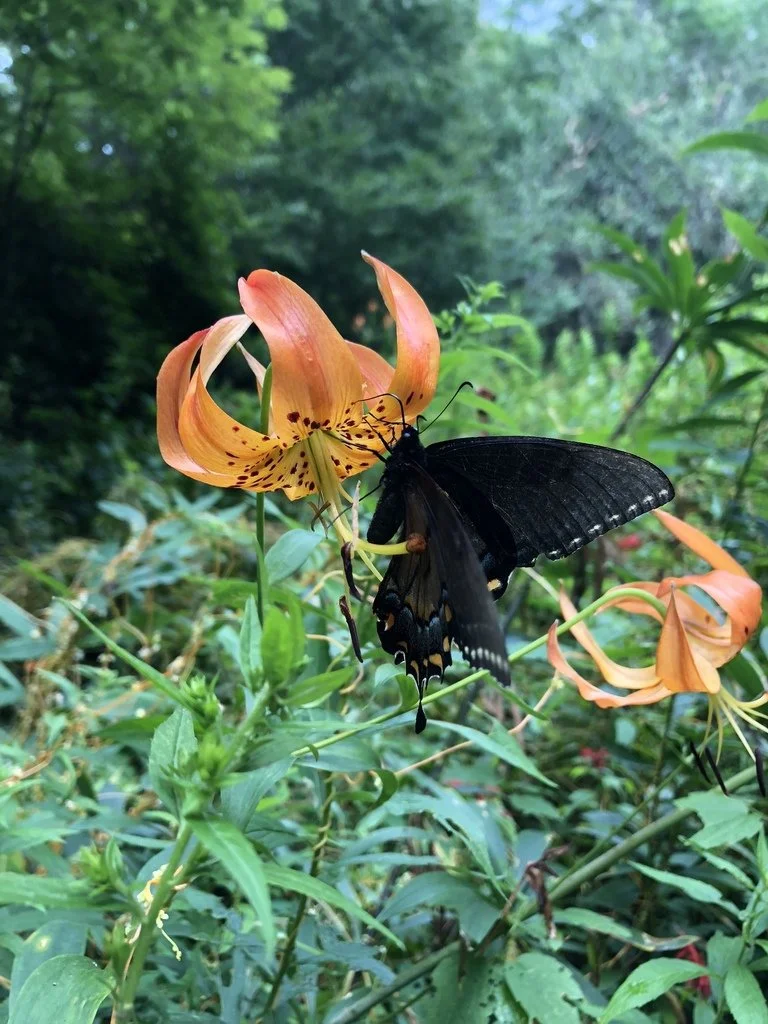 Image 2 of 2
Pot Size: 1 Quart
Native Status: Native
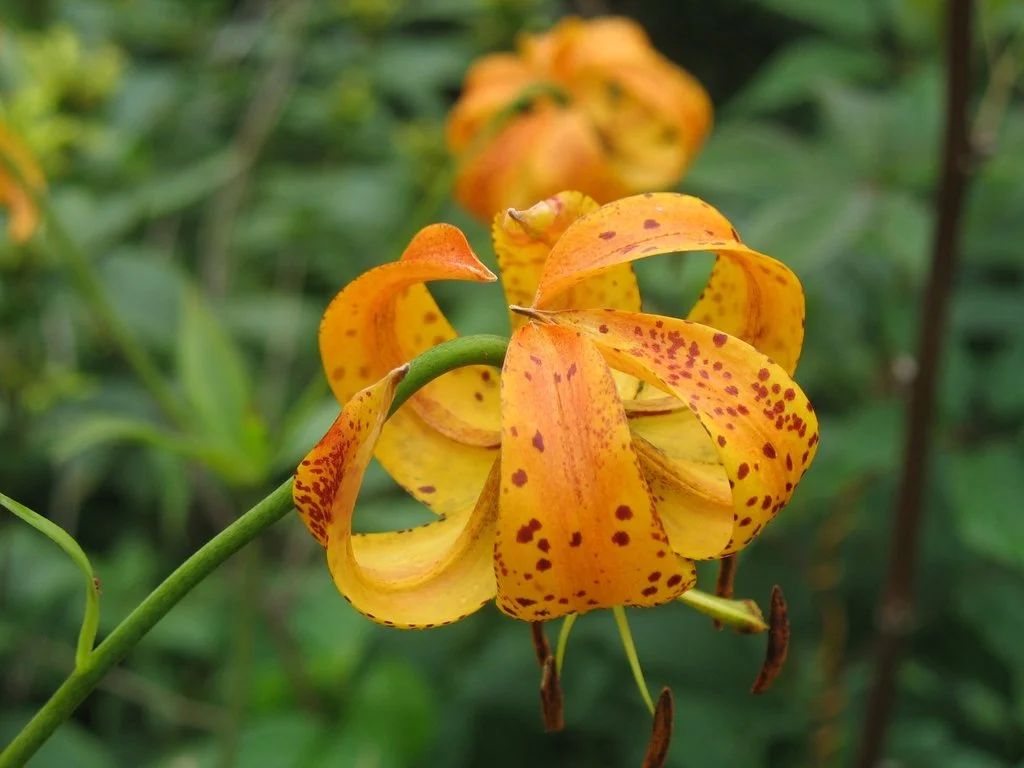
Description: Turk's-cap lily is an herbaceous perennial wildflower in the lily family (Liliaceae) native to the eastern and central regions of North America and found in cove forests, ravines, swamps and coastal bogs. The foliage is whorls of leaves up the stem. The flower is an orange-red flower thickly spotted with purple. The six tepals are recurved backward so that the tips often touch. It prefers humus-rich, moist to wet but well-drained soils in full sun to partial shade but will tolerate average garden soil that is consistently moist. This plant is one of the easiest NC native lilies to grow. Suitable for butterfly, native, pollinator, rain or water gardens. For further information see https://plants.ces.ncsu.edu/plants/lilium-superbum/.
Light Exposure: Full Sun to Part Shade Drought Tolerant : No
Soil Moisture: Moist to Wet Salt Tolerant: Yes
Mature Height: 4 – 8 ft Deer Resistant: No
Mature Width: 6 inches – 1 ft
Bloom Color/Bloom Time: Orange-red flowers with purple spots bloom July through August.
Historical Uses: Bulbs were made into soups by some Native Americans. The plant’s name is derived from the reflexed shape of the flowers petals, which resemble a type of hat worn by early Turkish people. Cultivated in England from American specimens, flowering as early as August 1738.
Wildlife Values: The drooping, recurved orange flowers are specialized for pollination by hummingbirds and swallowtail butterflies (such as the Pipevine and Eastern Tiger Swallowtail). It serves as a larval host plant for the Turk’s Cap White Skipper butterfly, which lays eggs on the buds and leaves.
👉 For more information visit NC Extension Gardener Plant Toolbox
The information provided here is for educational and informational purposes only and is not intended as medical advice. Medicinal plants can have serious side effects and interactions with medications. Consult your healthcare provider before using any herbal remedies, as you are responsible for your own health decisions.
Photo Credits:
1- Flower, Great Smoky Mts National Park Stacy Hodes CC BY 4.0
2- Butterfly on flowers Alyshapennachio CC BY-NC 4.0
Pot Size: 1 Quart
Native Status: Native
Description: Turk's-cap lily is an herbaceous perennial wildflower in the lily family (Liliaceae) native to the eastern and central regions of North America and found in cove forests, ravines, swamps and coastal bogs. The foliage is whorls of leaves up the stem. The flower is an orange-red flower thickly spotted with purple. The six tepals are recurved backward so that the tips often touch. It prefers humus-rich, moist to wet but well-drained soils in full sun to partial shade but will tolerate average garden soil that is consistently moist. This plant is one of the easiest NC native lilies to grow. Suitable for butterfly, native, pollinator, rain or water gardens. For further information see https://plants.ces.ncsu.edu/plants/lilium-superbum/.
Light Exposure: Full Sun to Part Shade Drought Tolerant : No
Soil Moisture: Moist to Wet Salt Tolerant: Yes
Mature Height: 4 – 8 ft Deer Resistant: No
Mature Width: 6 inches – 1 ft
Bloom Color/Bloom Time: Orange-red flowers with purple spots bloom July through August.
Historical Uses: Bulbs were made into soups by some Native Americans. The plant’s name is derived from the reflexed shape of the flowers petals, which resemble a type of hat worn by early Turkish people. Cultivated in England from American specimens, flowering as early as August 1738.
Wildlife Values: The drooping, recurved orange flowers are specialized for pollination by hummingbirds and swallowtail butterflies (such as the Pipevine and Eastern Tiger Swallowtail). It serves as a larval host plant for the Turk’s Cap White Skipper butterfly, which lays eggs on the buds and leaves.
👉 For more information visit NC Extension Gardener Plant Toolbox
The information provided here is for educational and informational purposes only and is not intended as medical advice. Medicinal plants can have serious side effects and interactions with medications. Consult your healthcare provider before using any herbal remedies, as you are responsible for your own health decisions.
Photo Credits:
1- Flower, Great Smoky Mts National Park Stacy Hodes CC BY 4.0
2- Butterfly on flowers Alyshapennachio CC BY-NC 4.0