 Image 1 of 1
Pot Size: 4 inch
Native Status: Non-Native
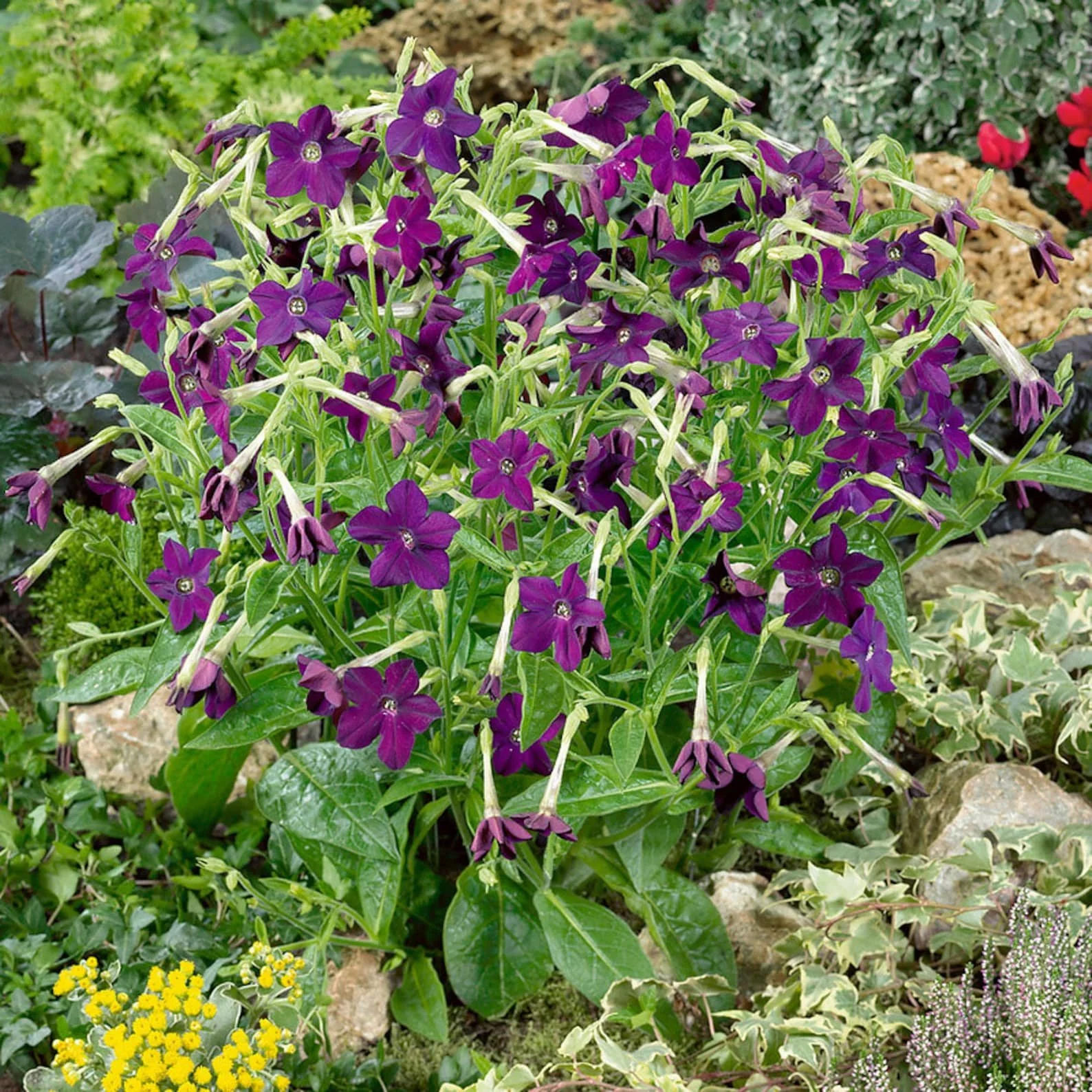
Description: A fragrant, heat-tolerant annual in NC, featuring intense deep-violet, tubular flowers that release a jasmine-like scent, particularly in the evening. The “Deep Purple” variety is a popular cultivar which won the All-America Selections (AAS) award for its exceptional garden performance and rich fragrance. Nicotiana alata is one of more than 60 species of annuals and perennials in the nightshade family, most of which are native to South America. The flowers of this species have long tubes that open into five lobes and are favored by hummingbirds and large night-pollinating moths. It should be noted that all parts of the plant are toxic to humans and animals if ingested.
Light Exposure: Full Sun to Part Shade Drought Tolerant: Yes
Soil Moisture: Medium Salt Tolerant: No
Mature Height: 3 – 5 ft. Deer Resistant: Yes
Mature Width: 1 – 2 ft.
Bloom Color/Bloom Time: Deep violet/Early July through first frost.
Historical Uses: While often grown for scent, Nicotiana species have been used in ceremonial and medicinal contexts by Indigenous, American, and Asian cultures. Introduced in the early 1800s, Nicotiana alata was favored in England and the US for its intense evening perfume, often planted along walkways or in conservatories. In Victorian times, it was used to create “moon gardens” for its medicinal anti-inflammatory properties. Preparations from the leaves were historically used in poultices to treat skin irritations, wounds, and insect bites. Due to the nicotine content, extracts from the leaves have also been used as a natural insecticide.
Wildlife Values: Attracts birds, butterflies, moths. The plant is a primary food source for moths, including hawk moths, which are attracted to its scent after sunset.
👉 For more information visit NC Extension Gardener Plant Toolbox
The information provided here is for educational and informational purposes only and is not intended as medical advice. Medicinal plants can have serious side effects and interactions with medications. Consult your healthcare provider before using any herbal remedies, as you are responsible for your own health decisions.
Photo Credits:
1 - Courtesy of Etsy Shop: OutsideprideSeed
Pot Size: 4 inch
Native Status: Non-Native
Description: A fragrant, heat-tolerant annual in NC, featuring intense deep-violet, tubular flowers that release a jasmine-like scent, particularly in the evening. The “Deep Purple” variety is a popular cultivar which won the All-America Selections (AAS) award for its exceptional garden performance and rich fragrance. Nicotiana alata is one of more than 60 species of annuals and perennials in the nightshade family, most of which are native to South America. The flowers of this species have long tubes that open into five lobes and are favored by hummingbirds and large night-pollinating moths. It should be noted that all parts of the plant are toxic to humans and animals if ingested.
Light Exposure: Full Sun to Part Shade Drought Tolerant: Yes
Soil Moisture: Medium Salt Tolerant: No
Mature Height: 3 – 5 ft. Deer Resistant: Yes
Mature Width: 1 – 2 ft.
Bloom Color/Bloom Time: Deep violet/Early July through first frost.
Historical Uses: While often grown for scent, Nicotiana species have been used in ceremonial and medicinal contexts by Indigenous, American, and Asian cultures. Introduced in the early 1800s, Nicotiana alata was favored in England and the US for its intense evening perfume, often planted along walkways or in conservatories. In Victorian times, it was used to create “moon gardens” for its medicinal anti-inflammatory properties. Preparations from the leaves were historically used in poultices to treat skin irritations, wounds, and insect bites. Due to the nicotine content, extracts from the leaves have also been used as a natural insecticide.
Wildlife Values: Attracts birds, butterflies, moths. The plant is a primary food source for moths, including hawk moths, which are attracted to its scent after sunset.
👉 For more information visit NC Extension Gardener Plant Toolbox
The information provided here is for educational and informational purposes only and is not intended as medical advice. Medicinal plants can have serious side effects and interactions with medications. Consult your healthcare provider before using any herbal remedies, as you are responsible for your own health decisions.
Photo Credits:
1 - Courtesy of Etsy Shop: OutsideprideSeed