Pot Size: 1 quart
Native Status: Native Cultivar
Description: ‘Peachie’s Pick’ is a compact, late-blooming Stokes’ aster cultivar that features fluffy, cornflower-like blue flowers (to 3” across) on generally erect, leafy stems growing to 12-18” tall. Cultivar name is in reference to the individual (Peachie Saxton) who discovered the plant and not to the flower color.Easily grown in average, medium moisture, well-drained soil in full sun. Tolerates filtered sunlight but prefers full sun. Prefers moist, sandy soils, but has surprisingly good drought and heat tolerance. Wet soil in winter is the main cause of death for this plant. A well-drained soil is essential. Deadhead individual spent flowers and remove spent flowering stems to encourage additional bloom. Plants can be cut back to basal foliage after bloom. Plant this aster as a border or mass planting in a native, pollinator, butterfly, cottage, or winter garden. Its tolerance of moisture also makes it appropriate for a pond margins or rain gardens.
Light Exposure: Full Sun – Partial Shade Drought Tolerant: Yes
Soil Moisture: Medium - Moist Salt Tolerant: No
Mature Height: 1 – 1.5 ft Deer Resistant: Yes
Mature Width: 1 – 1.5 ft
Bloom Color/Bloom Time: Blooms blue from June to September.
Historical Uses: Straight species Stokesia was use in folk medicine for treating fevers and respiratory problems. First documented 1818 in America.
Wildlife Values: Attracts a wide variety of bees, butterflies (including swallowtails), and hummingbirds. The large, showy flowers provide a vital nectar source, while the seed heads that form after blooming offer food for songbirds.
👉 For more information visit the Missouri Botanical Garden Plant Finder
Pot Size: 1 quart
Native Status: Native Cultivar
Description: ‘Peachie’s Pick’ is a compact, late-blooming Stokes’ aster cultivar that features fluffy, cornflower-like blue flowers (to 3” across) on generally erect, leafy stems growing to 12-18” tall. Cultivar name is in reference to the individual (Peachie Saxton) who discovered the plant and not to the flower color.Easily grown in average, medium moisture, well-drained soil in full sun. Tolerates filtered sunlight but prefers full sun. Prefers moist, sandy soils, but has surprisingly good drought and heat tolerance. Wet soil in winter is the main cause of death for this plant. A well-drained soil is essential. Deadhead individual spent flowers and remove spent flowering stems to encourage additional bloom. Plants can be cut back to basal foliage after bloom. Plant this aster as a border or mass planting in a native, pollinator, butterfly, cottage, or winter garden. Its tolerance of moisture also makes it appropriate for a pond margins or rain gardens.
Light Exposure: Full Sun – Partial Shade Drought Tolerant: Yes
Soil Moisture: Medium - Moist Salt Tolerant: No
Mature Height: 1 – 1.5 ft Deer Resistant: Yes
Mature Width: 1 – 1.5 ft
Bloom Color/Bloom Time: Blooms blue from June to September.
Historical Uses: Straight species Stokesia was use in folk medicine for treating fevers and respiratory problems. First documented 1818 in America.
Wildlife Values: Attracts a wide variety of bees, butterflies (including swallowtails), and hummingbirds. The large, showy flowers provide a vital nectar source, while the seed heads that form after blooming offer food for songbirds.
👉 For more information visit the Missouri Botanical Garden Plant Finder
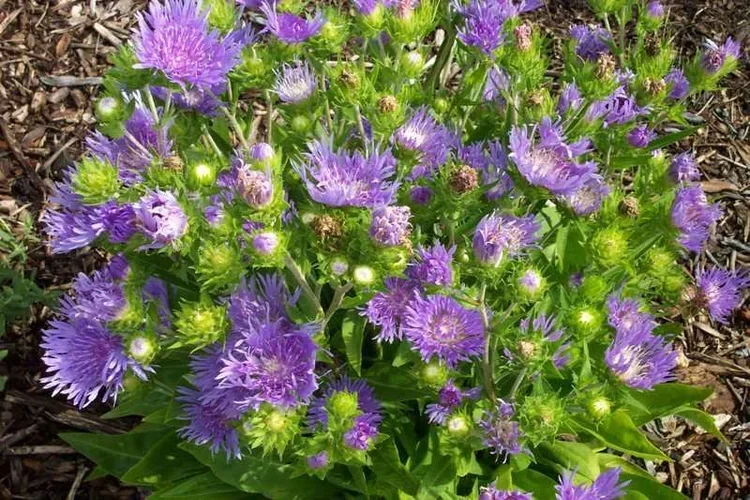 Image 1 of 3
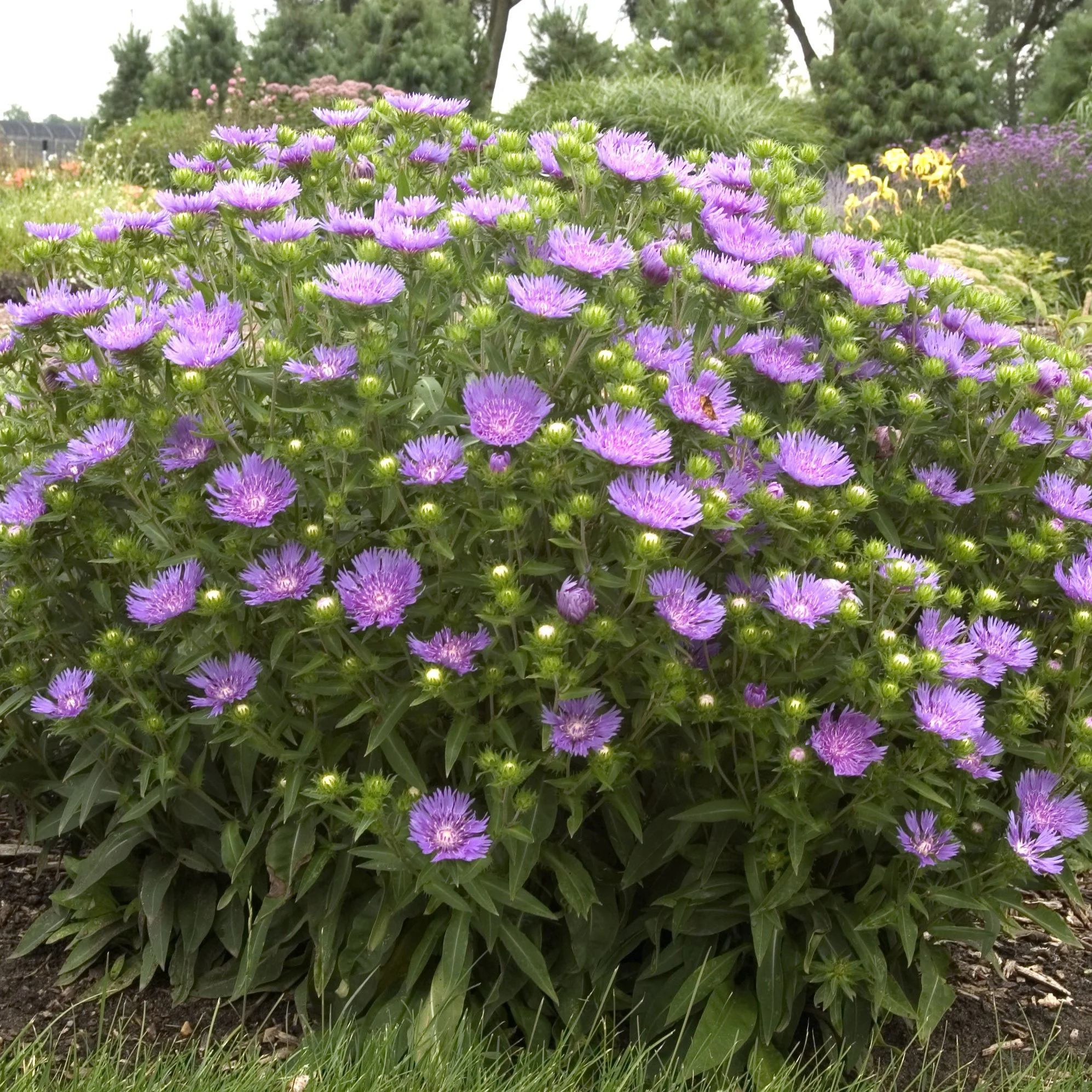 Image 2 of 3
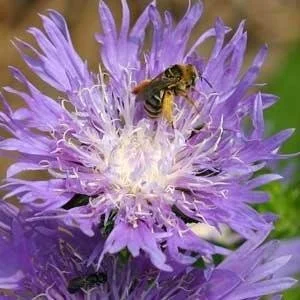 Image 3 of 3