Pot Size: 2 quarts
Native Status: Native
Description: Spotted beebalm is an herbaceous perennial in the mint family (Lamiaceae). Several varieties are recognized, but only var. punctata occurs in NC. It is known for its aromatic, spotted, pinkish-purple bracts and its ability to attract various pollinators like butterflies, bees, and hummingbirds. It is also known for being a host plant for some moth species. Spotted beebalm is a clump-forming plant, growing 1.5 to 2 feet tall. It spreads via rhizomes, forming larger clumps. It is a terrific addition to pollinator gardens, attracting butterflies, bees, hummingbirds, and even some beneficial predatory wasps.
Light Exposure: Full Sun to Part Shade Drought Tolerant : Yes
Soil Moisture: Medium - Dry Salt Tolerant: Yes
Mature Height: 1.5 – 2 ft Deer Resistant: Yes
Mature Width: 9 in. – 1 ft
Bloom Color/Bloom Time: Plant blooms July – September with yellowish-white blossoms densely covered in purple spots, surrounded by showy, leaf-like pink or lavender bracts.
Historical Uses: Spotted beebalm is high in thymol, which has antimicrobial, antifungal and antiseptic properties and was used historically to treat ringworm and hookworm infections. When crushed, the leaves emit an oregano-like scent.
Wildlife Values: Spotted beebalm is a significant pollinator plant, attracting bees, wasps, butterflies, and moths. It serves as a host plant for the Raspberry Pyrausta butterfly and is vital to the endangered Karner Blue butterfly. Monardas in general are larval hosts for many moths, including Anterastria teratophora, Lintneria eremitus.
👉 For more information visit NC Extension Gardener Plant Toolbox
Pot Size: 2 quarts
Native Status: Native
Description: Spotted beebalm is an herbaceous perennial in the mint family (Lamiaceae). Several varieties are recognized, but only var. punctata occurs in NC. It is known for its aromatic, spotted, pinkish-purple bracts and its ability to attract various pollinators like butterflies, bees, and hummingbirds. It is also known for being a host plant for some moth species. Spotted beebalm is a clump-forming plant, growing 1.5 to 2 feet tall. It spreads via rhizomes, forming larger clumps. It is a terrific addition to pollinator gardens, attracting butterflies, bees, hummingbirds, and even some beneficial predatory wasps.
Light Exposure: Full Sun to Part Shade Drought Tolerant : Yes
Soil Moisture: Medium - Dry Salt Tolerant: Yes
Mature Height: 1.5 – 2 ft Deer Resistant: Yes
Mature Width: 9 in. – 1 ft
Bloom Color/Bloom Time: Plant blooms July – September with yellowish-white blossoms densely covered in purple spots, surrounded by showy, leaf-like pink or lavender bracts.
Historical Uses: Spotted beebalm is high in thymol, which has antimicrobial, antifungal and antiseptic properties and was used historically to treat ringworm and hookworm infections. When crushed, the leaves emit an oregano-like scent.
Wildlife Values: Spotted beebalm is a significant pollinator plant, attracting bees, wasps, butterflies, and moths. It serves as a host plant for the Raspberry Pyrausta butterfly and is vital to the endangered Karner Blue butterfly. Monardas in general are larval hosts for many moths, including Anterastria teratophora, Lintneria eremitus.
👉 For more information visit NC Extension Gardener Plant Toolbox

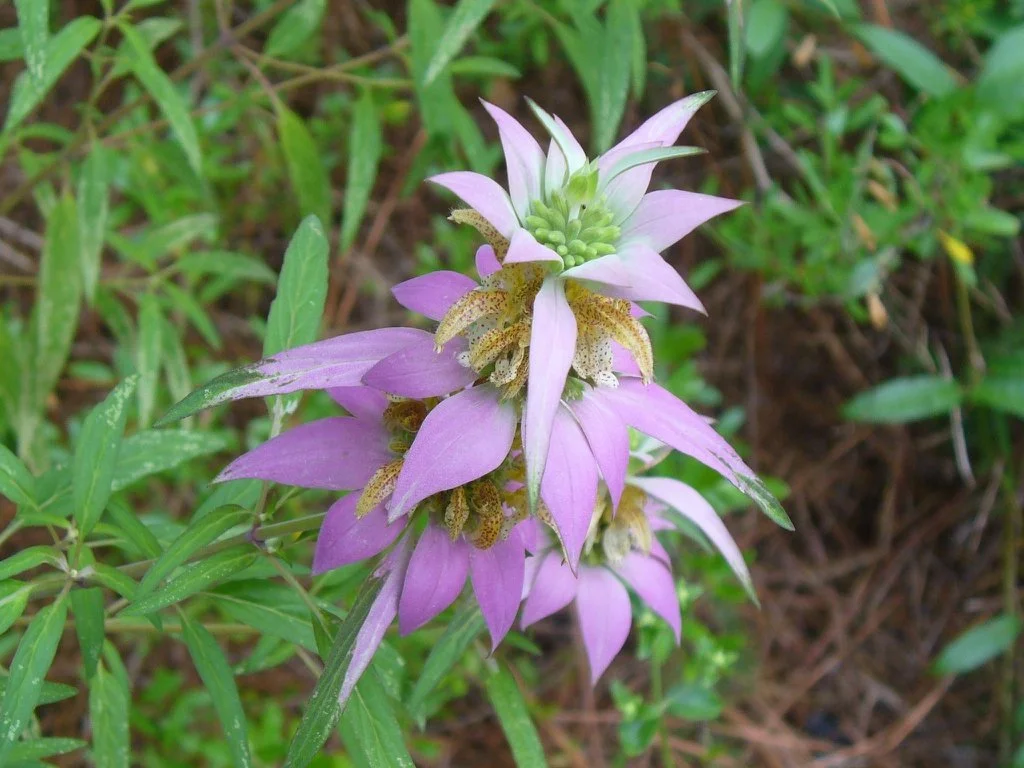 Image 1 of 3
 Image 2 of 3
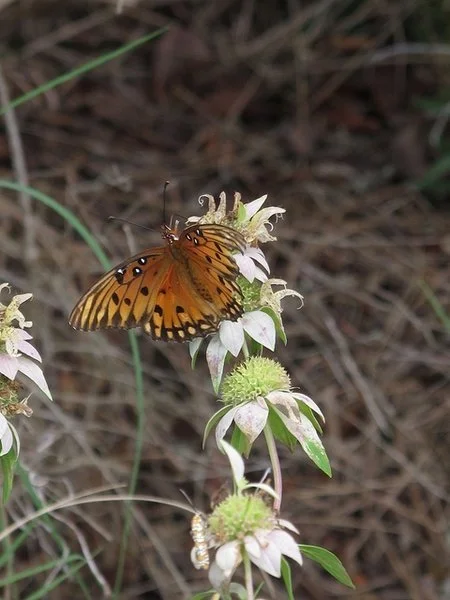 Image 3 of 3