 Image 1 of 2
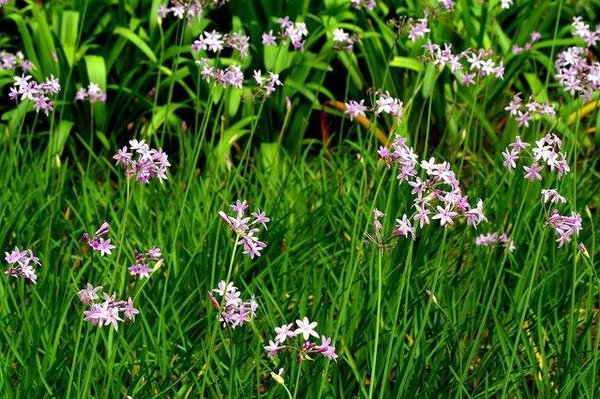 Image 2 of 2
Pot Size: 1 gallon
Native Status: Non-native
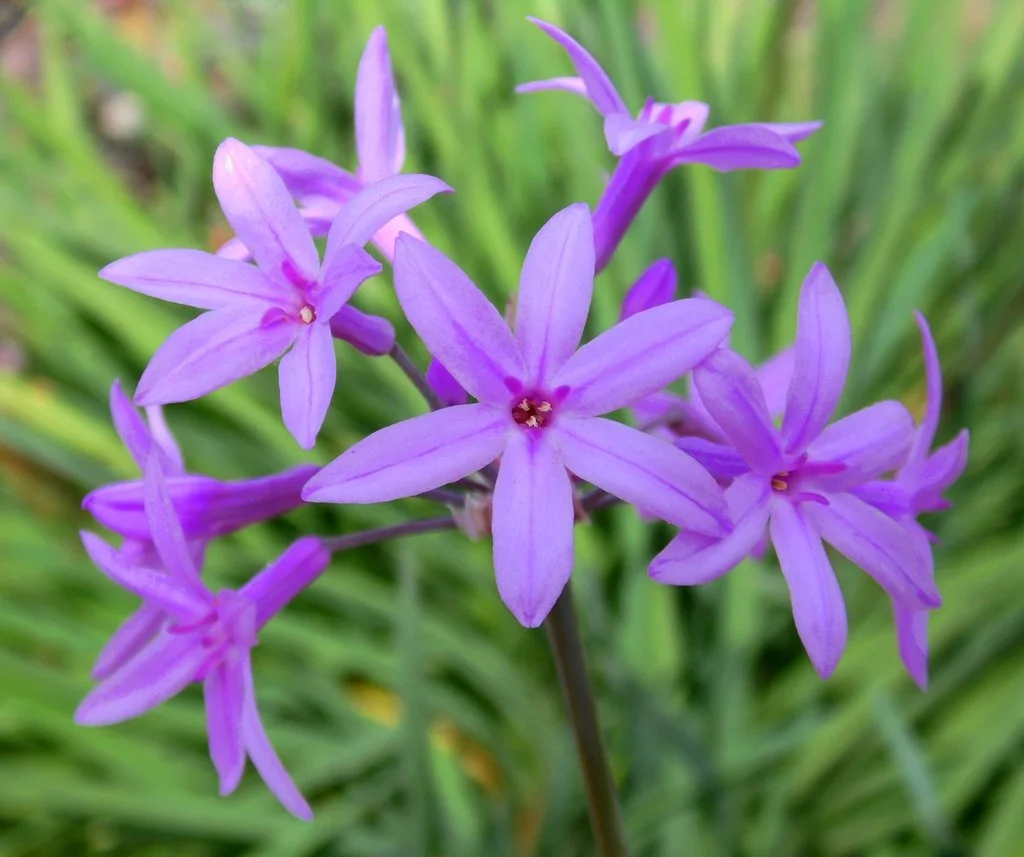
Description: Society Garlic is a tender perennial in the Amaryllidaceae family. It has a strong garlic-like scent. The flowers grow in clustered, tubular forms, with colors ranging from white to pink to purple. The plants have good drought and heat tolerance but do best with adequate moisture during the growing season. They can survive the winter in the ground if provided with protection and adequate mulch. They work well in rock, herb, pollinator, and container gardens or planted along borders and edges. The edible flowers have an oniony to peppery flavor and may be eaten raw or cooked. Said to add garlic-like flavor without causing bad breath!
Light Exposure: Full sun to partial shade Drought Tolerant: Yes
Soil Moisture: Moist well-drained Salt Tolerant: Moderately
Mature Height: 1 ft - 2 ft Deer Resistant: Yes
Mature Width: 1 ft – 2 ft
Bloom Color/Bloom Time: Purple-white flowers blooming early summer through fall.
Historical Uses: Introduced by European settlers during the colonial period, its initial use was medicinal. During the 19th century, garlic’s culinary use began to gain popularity especially in the southern regions. It became a staple in pickling and soups.
Wildlife Values: Attracts butterflies, bees and other beneficial insects. Its pungent, garlic-scented flowers attract bees and butterflies, while the dense foliage provides cover for beneficial insects. It acts as a natural repellent for pests like snails, slugs, moles, and rabbits
👉 For more information visit NC Extension Gardener Plant Toolbox
The information provided here is for educational and informational purposes only and is not intended as medical advice. Medicinal plants can have serious side effects and interactions with medications. Consult your healthcare provider before using any herbal remedies, as you are responsible for your own health decisions.
Photo Credits:
1 - Flower detail Krzysztof Ziarnek, Kenraiz CC BY-SA 3.0
2 - Flowers Manuel Martín Vicente CC BY 2.0
Pot Size: 1 gallon
Native Status: Non-native
Description: Society Garlic is a tender perennial in the Amaryllidaceae family. It has a strong garlic-like scent. The flowers grow in clustered, tubular forms, with colors ranging from white to pink to purple. The plants have good drought and heat tolerance but do best with adequate moisture during the growing season. They can survive the winter in the ground if provided with protection and adequate mulch. They work well in rock, herb, pollinator, and container gardens or planted along borders and edges. The edible flowers have an oniony to peppery flavor and may be eaten raw or cooked. Said to add garlic-like flavor without causing bad breath!
Light Exposure: Full sun to partial shade Drought Tolerant: Yes
Soil Moisture: Moist well-drained Salt Tolerant: Moderately
Mature Height: 1 ft - 2 ft Deer Resistant: Yes
Mature Width: 1 ft – 2 ft
Bloom Color/Bloom Time: Purple-white flowers blooming early summer through fall.
Historical Uses: Introduced by European settlers during the colonial period, its initial use was medicinal. During the 19th century, garlic’s culinary use began to gain popularity especially in the southern regions. It became a staple in pickling and soups.
Wildlife Values: Attracts butterflies, bees and other beneficial insects. Its pungent, garlic-scented flowers attract bees and butterflies, while the dense foliage provides cover for beneficial insects. It acts as a natural repellent for pests like snails, slugs, moles, and rabbits
👉 For more information visit NC Extension Gardener Plant Toolbox
The information provided here is for educational and informational purposes only and is not intended as medical advice. Medicinal plants can have serious side effects and interactions with medications. Consult your healthcare provider before using any herbal remedies, as you are responsible for your own health decisions.
Photo Credits:
1 - Flower detail Krzysztof Ziarnek, Kenraiz CC BY-SA 3.0
2 - Flowers Manuel Martín Vicente CC BY 2.0