 Image 1 of 2
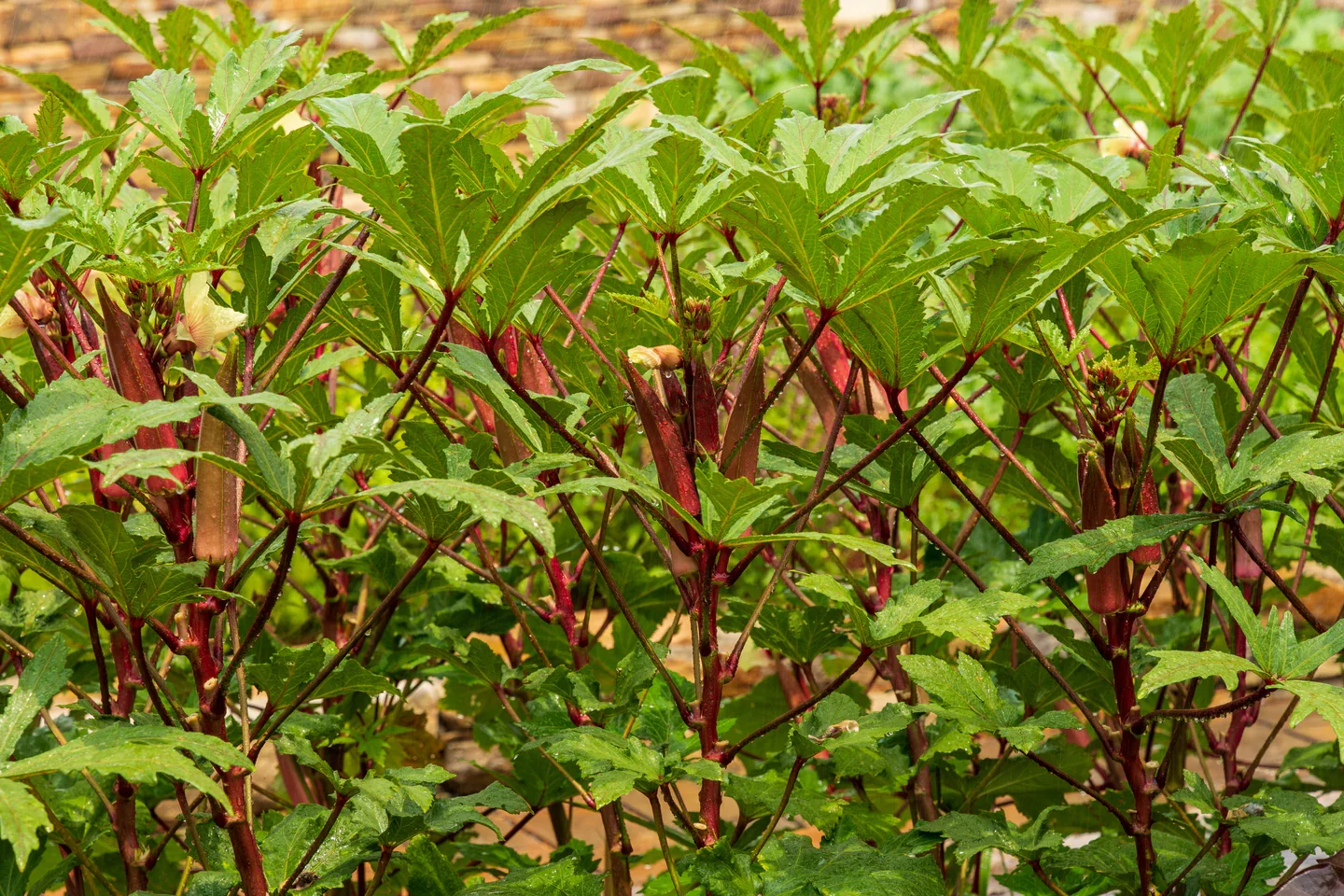 Image 2 of 2
Pot Size: 1 quart
Native Status: Non-native
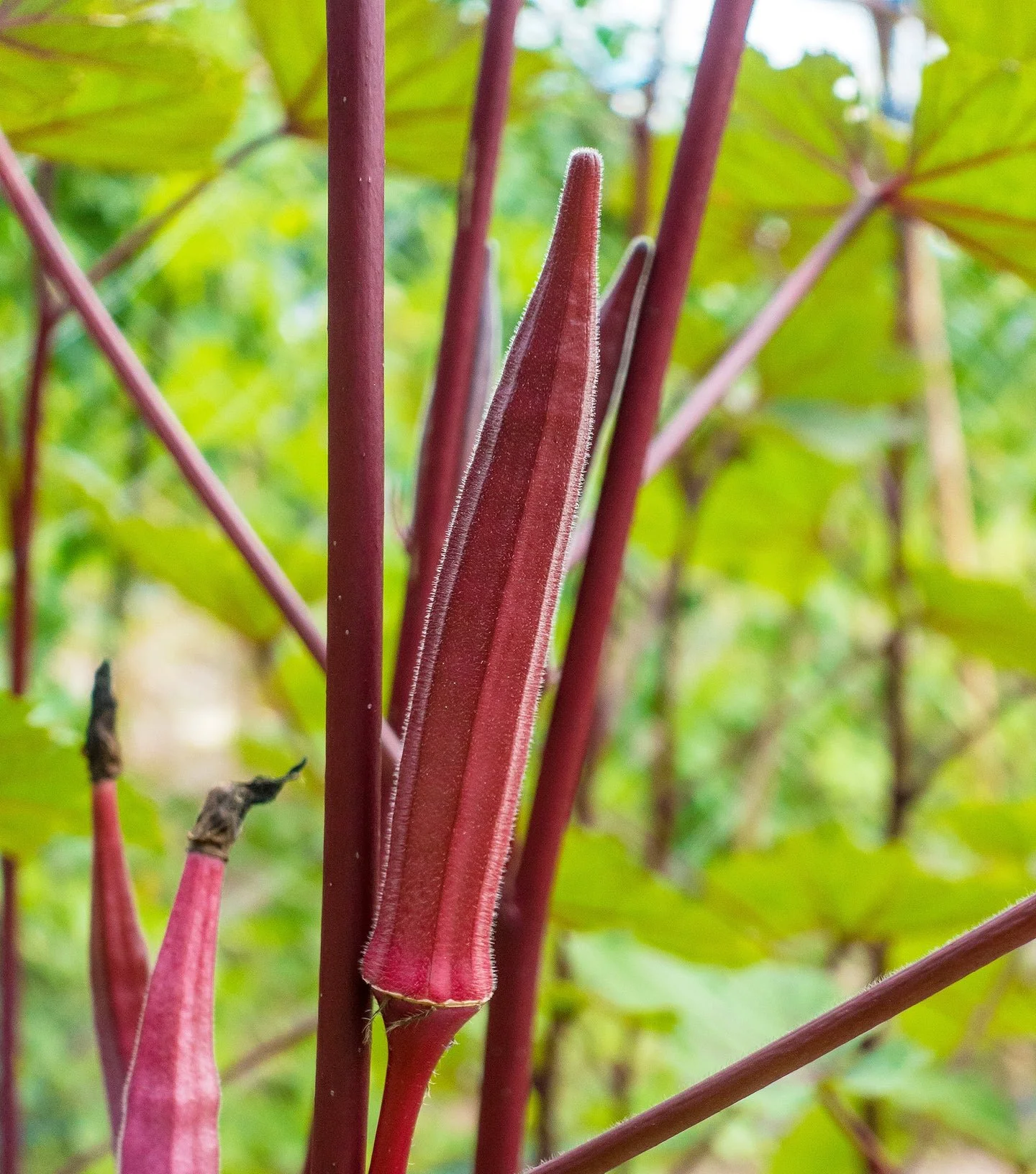
Description: Sea Island Red okra (Abelmoschus esculentus) is in the Malvaceae family, often referred to as the mallow or hibiscus family. It is a productive okra with slender, dark red pods that remain tender to 5 inches long. This variety comes from the Gullah Geechee community of the Georgia Sea Islands. The Sea Island Red is treasured not only as a productive crop but also as a living link to African diaspora culinary and farming heritage. Plants also display ornamental qualities with green leaves tinged in red and pale-yellow hibiscus-like flowers with a crimson throat, making it both a food crop and a garden showpiece.
Light Exposure: Full sun/partial shade Drought Tolerant: Yes
Soil Moisture: Dry well draining Salt Tolerant: Yes
Mature Height: 5 ft – 7 ft Deer Resistant: Yes
Mature Width: 1 ft – 2 ft
Bloom Color/Bloom Time: Striking yellow to pale yellow petals with deep red or purple centers which bloom for one day 50-60 days after planting.
Historical Uses: Sea Island Red Okra is a historic heirloom variety with deep cultural and agricultural roots along the coastal Sea Islands of South Carolina and Georgia. These barrier islands, historically home to the Gullah Geechee people, preserved African foodways and farming traditions, including okra, brought over through the transatlantic slave trade. Young pods are best enjoyed in classic Southern and African-inspired dishes such as gumbo, stews, and stir-fries. They can also be roasted, grilled, or pickled for added depth of flavor. First record in America 1775.
Wildlife Values: Its blooms attract native pollinators, while the fast-maturing, nutrient-dense pods, if left to mature, provide a substantial, edible seed source for birds and small mammals.
👉 For more information visit NC Extension Gardener Plant Toolbox
The information provided here is for educational and informational purposes only and is not intended as medical advice. Medicinal plants can have serious side effects and interactions with medications. Consult your healthcare provider before using any herbal remedies, as you are responsible for your own health decisions.
Photo Credits:
1- Sea Island Red Okra, Courtesy of Ujamaa Seeds
2- Sea Island Red Okra, Courtesy of Ujamaa Seeds
Pot Size: 1 quart
Native Status: Non-native
Description: Sea Island Red okra (Abelmoschus esculentus) is in the Malvaceae family, often referred to as the mallow or hibiscus family. It is a productive okra with slender, dark red pods that remain tender to 5 inches long. This variety comes from the Gullah Geechee community of the Georgia Sea Islands. The Sea Island Red is treasured not only as a productive crop but also as a living link to African diaspora culinary and farming heritage. Plants also display ornamental qualities with green leaves tinged in red and pale-yellow hibiscus-like flowers with a crimson throat, making it both a food crop and a garden showpiece.
Light Exposure: Full sun/partial shade Drought Tolerant: Yes
Soil Moisture: Dry well draining Salt Tolerant: Yes
Mature Height: 5 ft – 7 ft Deer Resistant: Yes
Mature Width: 1 ft – 2 ft
Bloom Color/Bloom Time: Striking yellow to pale yellow petals with deep red or purple centers which bloom for one day 50-60 days after planting.
Historical Uses: Sea Island Red Okra is a historic heirloom variety with deep cultural and agricultural roots along the coastal Sea Islands of South Carolina and Georgia. These barrier islands, historically home to the Gullah Geechee people, preserved African foodways and farming traditions, including okra, brought over through the transatlantic slave trade. Young pods are best enjoyed in classic Southern and African-inspired dishes such as gumbo, stews, and stir-fries. They can also be roasted, grilled, or pickled for added depth of flavor. First record in America 1775.
Wildlife Values: Its blooms attract native pollinators, while the fast-maturing, nutrient-dense pods, if left to mature, provide a substantial, edible seed source for birds and small mammals.
👉 For more information visit NC Extension Gardener Plant Toolbox
The information provided here is for educational and informational purposes only and is not intended as medical advice. Medicinal plants can have serious side effects and interactions with medications. Consult your healthcare provider before using any herbal remedies, as you are responsible for your own health decisions.
Photo Credits:
1- Sea Island Red Okra, Courtesy of Ujamaa Seeds
2- Sea Island Red Okra, Courtesy of Ujamaa Seeds