
 Image 1 of 2
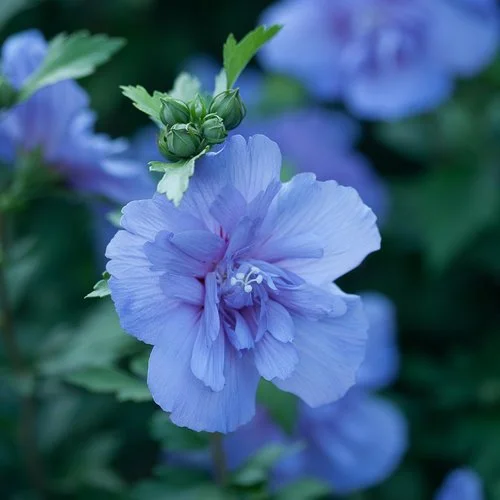 Image 2 of 2
Pot Size: 3 gallon
Native Status: Non-native
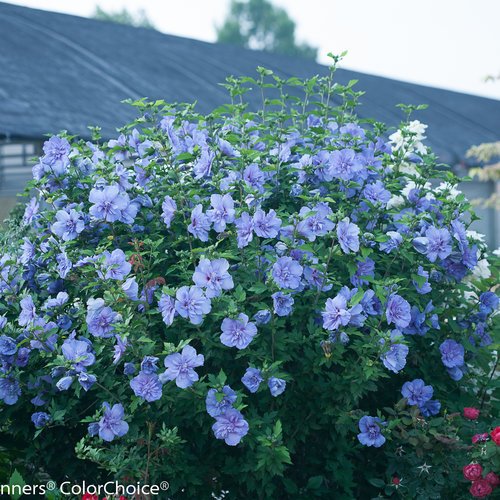
Description: Rose of Sharon is a rapidly growing, large, deciduous shrub or tree in the Malvaceae (mallow) family. It grows to 8 to 12 feet tall and 6 to 10 feet wide. Plant in locations with full sun to partial shade. It is tolerant of neglect and is pH adaptable. Grows best in moist, well-drained soils but is tolerant of all except extremely wet or dry soils. It prefers hot weather. Spring pruning will encourage flowers to grow on new growth and will increase flower size. Brilliant blue blooms late summer to fall. Can be planted in the landscape or containers.
Light Exposure: Full Sun to Part Shade Drought Tolerant: Yes
Soil Moisture: Medium Salt Tolerant: Yes
Mature Height: 8-12 ft Deer Resistant: Yes
Mature Width: 6-10 ft
Bloom Color/Bloom Time: Brilliant blue blooms from late summer to fall.
Historical Uses: Historically significant, hardy shrub, often recognized by its edible flowers and leaves, which are rich in antioxidants and vitamin C. Member of the Mallow family which is culturally significant to the Gullah Geechee people. Historically, it has been used in Asian, European, and American gardens for ornamental beauty and in traditional medicine for its diuretic, anti-inflammatory, and anti-fungal properties, specifically for treating skin, stomach,
Wildlife Values: Serves as a host for the larval stage of the Gray Hairstreak butterfly. Highly attractive to hummingbirds. Members of the genus Hibiscus support the following specialized bee: Ptilothrix bombiformis. Pollinator plant that supports birds, bees, and butterflies.
👉 For more information visit the NC Extension Gardener Plant Toolbox
The information provided here is for educational and informational purposes only and is not intended as medical advice. Medicinal plants can have serious side effects and interactions with medications. Consult your healthcare provider before using any herbal remedies, as you are responsible for your own health decisions.
Photo Credits:
1 - Courtesy of Proven Winners
2 - Courtesy of Proven Winners
Pot Size: 3 gallon
Native Status: Non-native
Description: Rose of Sharon is a rapidly growing, large, deciduous shrub or tree in the Malvaceae (mallow) family. It grows to 8 to 12 feet tall and 6 to 10 feet wide. Plant in locations with full sun to partial shade. It is tolerant of neglect and is pH adaptable. Grows best in moist, well-drained soils but is tolerant of all except extremely wet or dry soils. It prefers hot weather. Spring pruning will encourage flowers to grow on new growth and will increase flower size. Brilliant blue blooms late summer to fall. Can be planted in the landscape or containers.
Light Exposure: Full Sun to Part Shade Drought Tolerant: Yes
Soil Moisture: Medium Salt Tolerant: Yes
Mature Height: 8-12 ft Deer Resistant: Yes
Mature Width: 6-10 ft
Bloom Color/Bloom Time: Brilliant blue blooms from late summer to fall.
Historical Uses: Historically significant, hardy shrub, often recognized by its edible flowers and leaves, which are rich in antioxidants and vitamin C. Member of the Mallow family which is culturally significant to the Gullah Geechee people. Historically, it has been used in Asian, European, and American gardens for ornamental beauty and in traditional medicine for its diuretic, anti-inflammatory, and anti-fungal properties, specifically for treating skin, stomach,
Wildlife Values: Serves as a host for the larval stage of the Gray Hairstreak butterfly. Highly attractive to hummingbirds. Members of the genus Hibiscus support the following specialized bee: Ptilothrix bombiformis. Pollinator plant that supports birds, bees, and butterflies.
👉 For more information visit the NC Extension Gardener Plant Toolbox
The information provided here is for educational and informational purposes only and is not intended as medical advice. Medicinal plants can have serious side effects and interactions with medications. Consult your healthcare provider before using any herbal remedies, as you are responsible for your own health decisions.
Photo Credits:
1 - Courtesy of Proven Winners
2 - Courtesy of Proven Winners