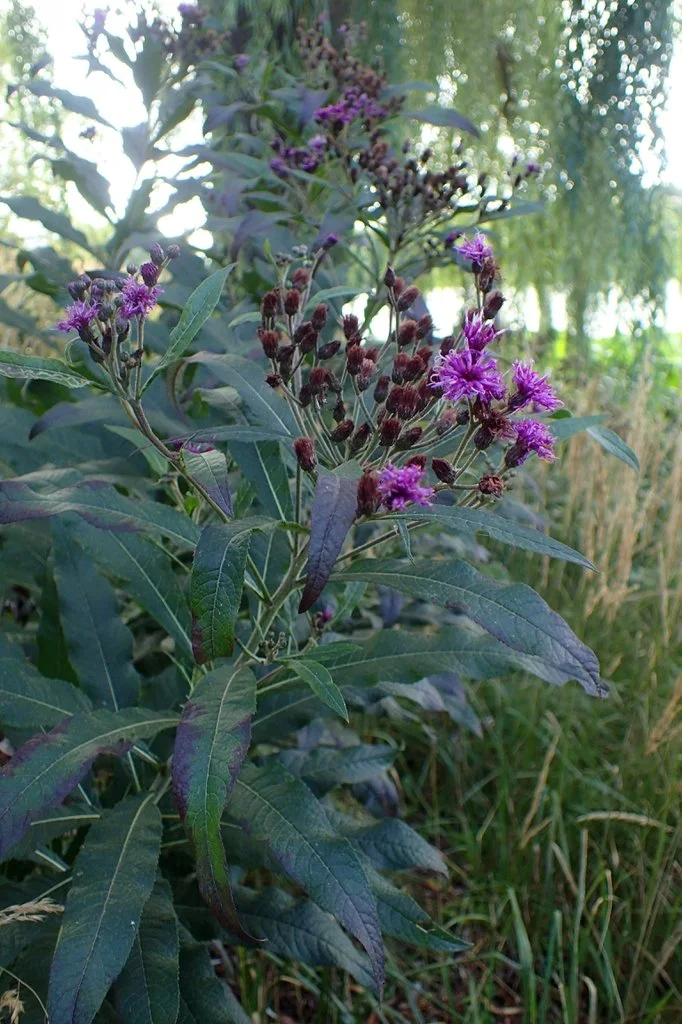
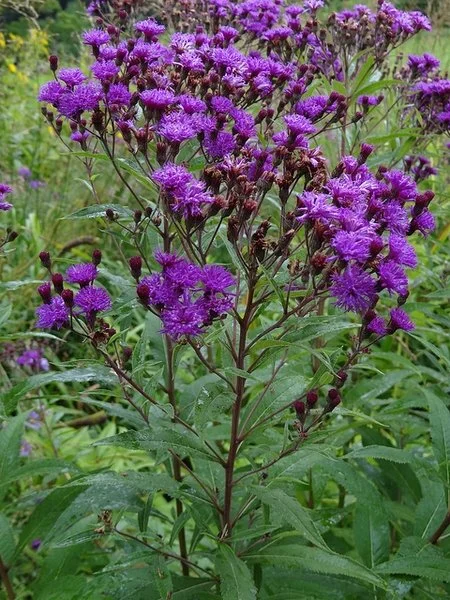
Iron Weed ~ Vernonia noveboracensis

$8.00
sold out

Pot Size:  2 quarts
Native Status:  Native

Description: Ironweed is an herbaceous native perennial wildflower in the Aster family (Asteraceae) and is found in all areas of NC. It may grow 5 to 8 feet tall so is suitable for a back border. Prefers rich moist acidic soils but will grow in average moist to wet soils in full sun. Propagate by seed. The deep purple flowers appear in clusters from mid-summer to mid-fall on strong stems. This low-maintenance wildflower naturalizes easily and is adaptable to garden conditions. Native bees nest in the dead, hollow stems, so gardeners are encouraged to cut back dead stems to 12 to 24 inches and allow them to remain standing until they disintegrate on their own.

Light Exposure: Full Sun to Partial Shade                           Drought Tolerant:  Moderate
Soil Moisture:    Medium                                        Salt Tolerant:  Moderate
Mature Height:  5 – 8 ft                                                       Deer Resistant: Yes
Mature Width:  3 – 5 ft                           

Bloom Color/Bloom Time:   Purple blooms from August through September.

Historical Uses:  Used by early settlers for infusions (teas) of the leaves and roots to treat various ailments. It was commonly used to relieve pain after childbirth and to treat stomach ulcers. First documented 1744 in America.

Wildlife Values:  Flowers are attractive to butterflies, bees and other pollinators. Songbirds eat the seeds. Members of the genus Vernonia support the following specialized bee: Melissodes (Eumelissodes) denticulatus. Dead stems are used by stem-nesting bees. Gardeners are encouraged to cut back dead stems to 12 to 24 inches and allow them to remain standing until they disintegrate on their own.

‍ ‍👉 For more information visit NC Extension Gardener Plant Toolbox

Pot Size:  2 quarts
Native Status:  Native

Description: Ironweed is an herbaceous native perennial wildflower in the Aster family (Asteraceae) and is found in all areas of NC. It may grow 5 to 8 feet tall so is suitable for a back border. Prefers rich moist acidic soils but will grow in average moist to wet soils in full sun. Propagate by seed. The deep purple flowers appear in clusters from mid-summer to mid-fall on strong stems. This low-maintenance wildflower naturalizes easily and is adaptable to garden conditions. Native bees nest in the dead, hollow stems, so gardeners are encouraged to cut back dead stems to 12 to 24 inches and allow them to remain standing until they disintegrate on their own.

Light Exposure: Full Sun to Partial Shade                           Drought Tolerant:  Moderate
Soil Moisture:    Medium                                        Salt Tolerant:  Moderate
Mature Height:  5 – 8 ft                                                       Deer Resistant: Yes
Mature Width:  3 – 5 ft                           

Bloom Color/Bloom Time:   Purple blooms from August through September.

Historical Uses:  Used by early settlers for infusions (teas) of the leaves and roots to treat various ailments. It was commonly used to relieve pain after childbirth and to treat stomach ulcers. First documented 1744 in America.

Wildlife Values:  Flowers are attractive to butterflies, bees and other pollinators. Songbirds eat the seeds. Members of the genus Vernonia support the following specialized bee: Melissodes (Eumelissodes) denticulatus. Dead stems are used by stem-nesting bees. Gardeners are encouraged to cut back dead stems to 12 to 24 inches and allow them to remain standing until they disintegrate on their own.

‍ ‍👉 For more information visit NC Extension Gardener Plant Toolbox

The information provided here is for educational and informational purposes only and is not intended as medical advice. Medicinal plants can have serious side effects and interactions with medications. Consult your healthcare provider before using any herbal remedies, as you are responsible for your own health decisions.

Photo Credits:

1- Flowers Esther Westerveld CC BY-NC 2.0
2- Form Krzysztof Ziarnek, Kenraiz CC BY-SA 4.0