Pot Size: 1 quart
Native Status: Native Cultivar
Description: 'Fireworks' features tiny, bright yellow flowers in dense, plume-like panicles on the ends of stiff, alternate-leaved stems typically growing 3-3.5' tall. Lacy flower panicles purportedly resemble fireworks, hence the name. Easily grown in average, slightly acidic, medium to wet, well-drained soils in full sun. Tolerates light shade. May be grown from seed and may self-seed in the garden. This is a spreading plant which may self-seed in the garden. The plant was discovered in the 1970s near Wilson, North Carolina, by Ken Moore, then assistant director of the North Carolina Botanical Garden (NCBG).
Light Exposure: Full Sun Drought Tolerant: Yes
Soil Moisture: Medium; can tolerate wet soils Salt Tolerant: Yes
Mature Height: 3 – 5 ft Deer Resistant: Yes
Mature Width: 2.5 – 3 ft
Bloom Color/Bloom Time: Blooms yellow from September to October.
Historical Uses: Plant was used to relieve toothaches, sore throats, and as a poultice for wounds. It was used to treat internal bleeding and rheumatism. During the American Revolution, goldenrod tea was used as a substitute for British imported tea. This plant is often misidentified as the cause of hay fever, but this is a misconception; the true culprit is typically ragweed (Ambrosia spp.), which blooms at the same time. First documented 1768 in America.
Wildlife Values: Late-season ecological value, supporting a wide array of pollinators and birds. It is a vital food source for butterflies (including Monarchs), bees, and beneficial insects in late summer and fall, while its seeds are enjoyed by songbirds in winter.
👉 For more information visit NC Extension Gardener Plant Toolbox
Pot Size: 1 quart
Native Status: Native Cultivar
Description: 'Fireworks' features tiny, bright yellow flowers in dense, plume-like panicles on the ends of stiff, alternate-leaved stems typically growing 3-3.5' tall. Lacy flower panicles purportedly resemble fireworks, hence the name. Easily grown in average, slightly acidic, medium to wet, well-drained soils in full sun. Tolerates light shade. May be grown from seed and may self-seed in the garden. This is a spreading plant which may self-seed in the garden. The plant was discovered in the 1970s near Wilson, North Carolina, by Ken Moore, then assistant director of the North Carolina Botanical Garden (NCBG).
Light Exposure: Full Sun Drought Tolerant: Yes
Soil Moisture: Medium; can tolerate wet soils Salt Tolerant: Yes
Mature Height: 3 – 5 ft Deer Resistant: Yes
Mature Width: 2.5 – 3 ft
Bloom Color/Bloom Time: Blooms yellow from September to October.
Historical Uses: Plant was used to relieve toothaches, sore throats, and as a poultice for wounds. It was used to treat internal bleeding and rheumatism. During the American Revolution, goldenrod tea was used as a substitute for British imported tea. This plant is often misidentified as the cause of hay fever, but this is a misconception; the true culprit is typically ragweed (Ambrosia spp.), which blooms at the same time. First documented 1768 in America.
Wildlife Values: Late-season ecological value, supporting a wide array of pollinators and birds. It is a vital food source for butterflies (including Monarchs), bees, and beneficial insects in late summer and fall, while its seeds are enjoyed by songbirds in winter.
👉 For more information visit NC Extension Gardener Plant Toolbox
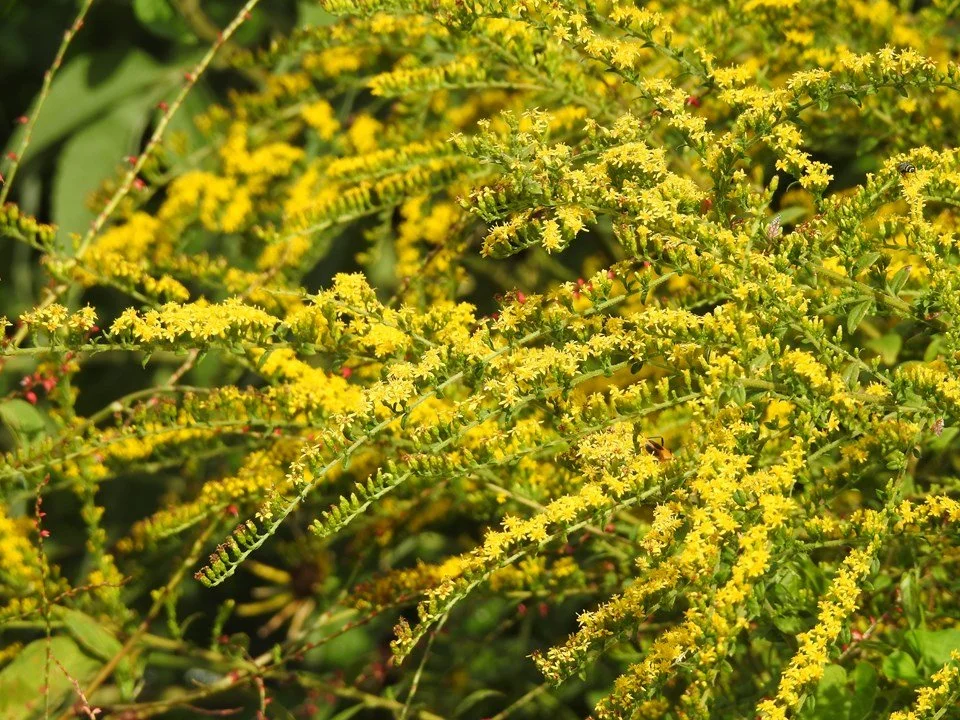 Image 1 of 2
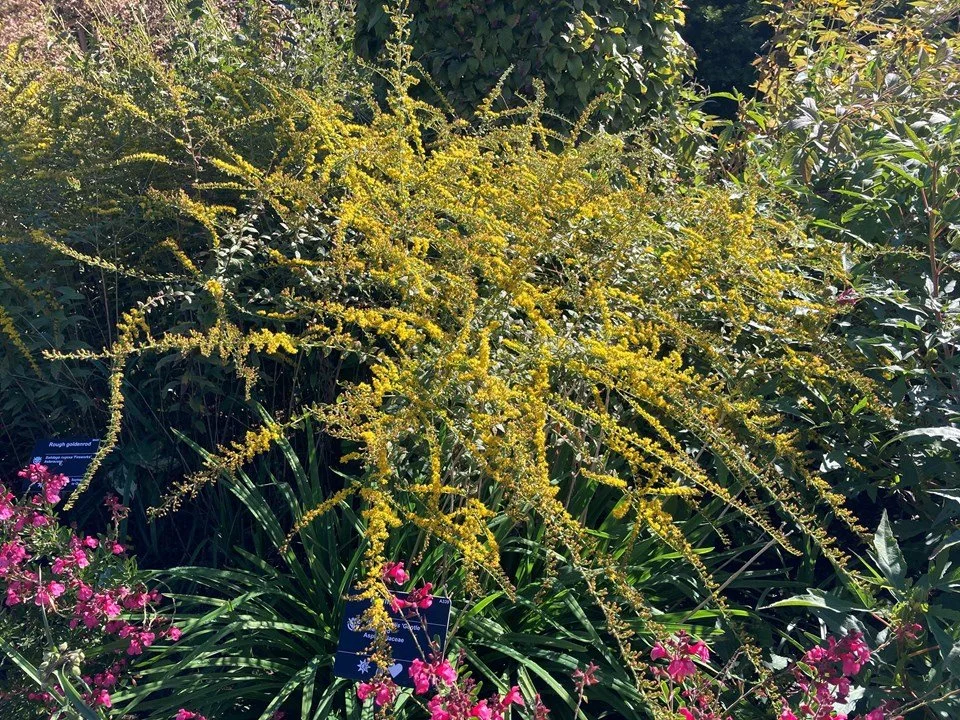 Image 2 of 2