
 Image 1 of 3
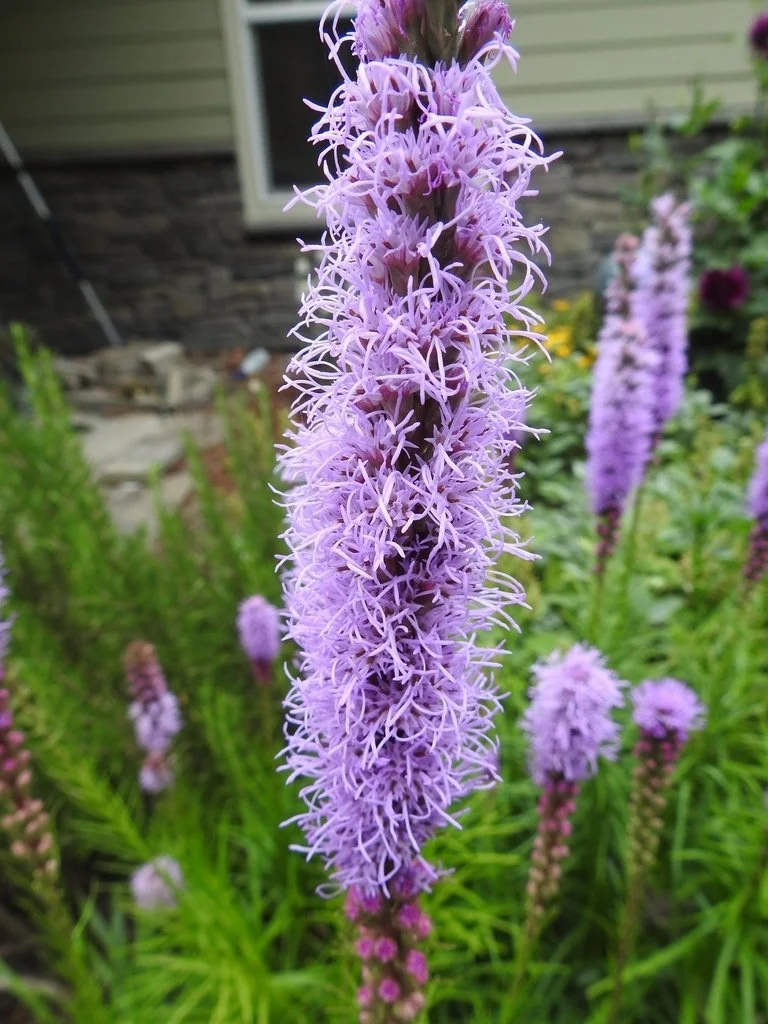 Image 2 of 3
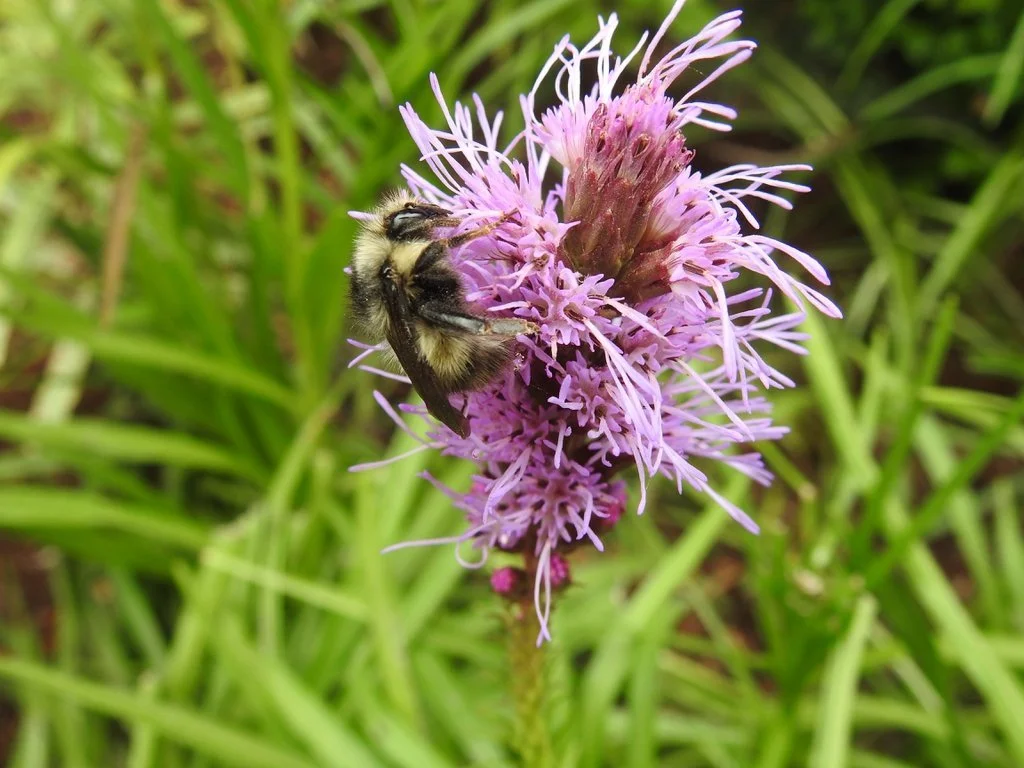 Image 3 of 3
Pot Size: 1 Quart
Native Status: Native
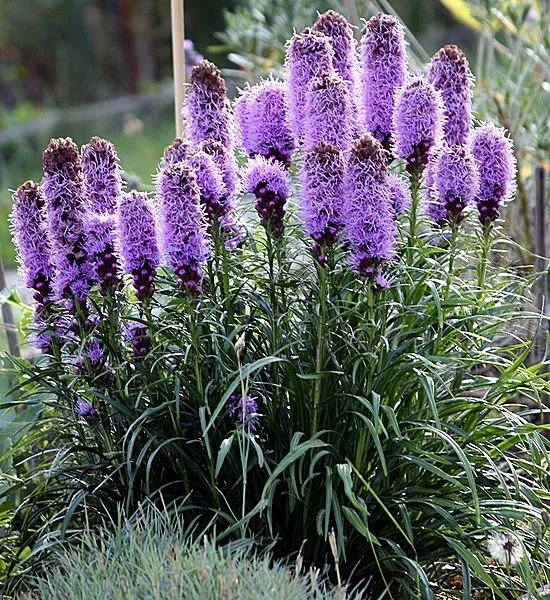
Description: Gayfeather (aka Blazing Star) is a clump-forming perennial that typically grows 3 to 6 feet tall. In NC it is found in the coastal and Piedmont areas. The tall spikes of flowers bloom from the top down, are showy, and attract pollinators. The foliage is grass-like and grows in clumps. Plant prefers average to moist, well-drained soils that range from acidic to neutral in pH. It grows well in full sun to partial shade and tolerates summer heat and humidity. This species does better in moist soils than some other blazing stars. The plant has corms with shallow fibrous roots and can produce new colonies from its corms, though it most often propagates by seed. Native bees nest in the dead, hollow stems, so gardeners are encouraged to cut back dead stems to 12 to 24 inches and allow them to remain standing until they disintegrate on their own. Read more about best practices for stem-nesting bees in this NC Extension publication.
Light Exposure: Full Sun to Part Shade Drought Tolerant : Once established
Soil Moisture: Moist well drained Salt Tolerant: No
Mature Height: 3 – 6 ft Deer Resistant: Moderately
Mature Width: 3 inches – 1.5 ft
Bloom Color/Bloom Time: Purple/Lavendar blooms in mid-summer.
Historical Uses: Historically used in the United States for decorative and medicinal properties. Native American tribes utilized it to treat coughs and colds, snake bites as well as to make dye for clothing. Roots were used for food – either baked or boiled. First documented in America 1791.
Wildlife Values: Flowers are attractive to butterflies, bees, hummingbirds, moths, songbirds. Larval forms of Schinia sanguinea (Liatris Flower Moth) feed on the flowers and seeds, and the larval form of Carmenta anthracipennis (Liatris Borer Moth) eat the stems. Goldfinches eat the seeds with relish. Dead stems are used by stem-nesting bees.
👉For more information visit NC Extension Gardener Plant Toolbox
The information provided here is for educational and informational purposes only and is not intended as medical advice. Medicinal plants can have serious side effects and interactions with medications. Consult your healthcare provider before using any herbal remedies, as you are responsible for your own health decisions.
Photo Credits:
1 - Form Hedwig Storch CC BY-SA 3.0
2 - Flowers in a spike Kathleen Moore CC BY 4.0
3 - Bumble bee sipping nectar from the flowers Kathleen Moore CC BY 4.0
Pot Size: 1 Quart
Native Status: Native
Description: Gayfeather (aka Blazing Star) is a clump-forming perennial that typically grows 3 to 6 feet tall. In NC it is found in the coastal and Piedmont areas. The tall spikes of flowers bloom from the top down, are showy, and attract pollinators. The foliage is grass-like and grows in clumps. Plant prefers average to moist, well-drained soils that range from acidic to neutral in pH. It grows well in full sun to partial shade and tolerates summer heat and humidity. This species does better in moist soils than some other blazing stars. The plant has corms with shallow fibrous roots and can produce new colonies from its corms, though it most often propagates by seed. Native bees nest in the dead, hollow stems, so gardeners are encouraged to cut back dead stems to 12 to 24 inches and allow them to remain standing until they disintegrate on their own. Read more about best practices for stem-nesting bees in this NC Extension publication.
Light Exposure: Full Sun to Part Shade Drought Tolerant : Once established
Soil Moisture: Moist well drained Salt Tolerant: No
Mature Height: 3 – 6 ft Deer Resistant: Moderately
Mature Width: 3 inches – 1.5 ft
Bloom Color/Bloom Time: Purple/Lavendar blooms in mid-summer.
Historical Uses: Historically used in the United States for decorative and medicinal properties. Native American tribes utilized it to treat coughs and colds, snake bites as well as to make dye for clothing. Roots were used for food – either baked or boiled. First documented in America 1791.
Wildlife Values: Flowers are attractive to butterflies, bees, hummingbirds, moths, songbirds. Larval forms of Schinia sanguinea (Liatris Flower Moth) feed on the flowers and seeds, and the larval form of Carmenta anthracipennis (Liatris Borer Moth) eat the stems. Goldfinches eat the seeds with relish. Dead stems are used by stem-nesting bees.
👉For more information visit NC Extension Gardener Plant Toolbox
The information provided here is for educational and informational purposes only and is not intended as medical advice. Medicinal plants can have serious side effects and interactions with medications. Consult your healthcare provider before using any herbal remedies, as you are responsible for your own health decisions.
Photo Credits:
1 - Form Hedwig Storch CC BY-SA 3.0
2 - Flowers in a spike Kathleen Moore CC BY 4.0
3 - Bumble bee sipping nectar from the flowers Kathleen Moore CC BY 4.0