Pot Size: 2 quarts
Native Status: Native
Description: False sunflower is a native, herbaceous perennial, wildflower with an upright and clumping habit, growing 3 to 6 feet tall, with orangish-yellow daisy-like flowers with a brown or golden yellow cone-shaped center disk. This plant is easy to grow and thrives in full sun, tolerating a variety of soil types, including clay, dry, and poor soils. The soil should be medium moist to dry and well-drained. If planted in shade, they tend to be less hardy and will have weaker stems.
Light Exposure: Full Sun to Part Shade Drought Tolerant : Yes
Soil Moisture: Medium - Dry Salt Tolerant: Yes
Mature Height: 3 – 6 ft Deer Resistant: Yes
Mature Width: 2 – 4 ft
Bloom Color/Bloom Time: Orange-yellow petals with dark gold-brown centers bloom summer through fall.
Historical Uses: Early settlers used the leaves and roots to create teas, specifically targeting lung ailments, cold symptoms, and to reduce fevers. Leaf teas were used to reduce fevers and treat malaria.
Wildlife Values: Crucial nectar source for bees, butterflies, and hummingbirds from summer to fall. The species Heliopsis helianthoides (false sunflower) is a known host plant for caterpillars of the Silvery Checkerspot butterfly (Chlosyne nycteis) and the Painted Lady butterfly (Vanessa virginiensis). The ground nesting bee, Holcopasites heliopis, is a specialist pollinator of Heliopsis helianthoides. Also acts as a host for sunflower moth caterpillar (Homoeosoma electellum) . Its seeds feed birds in fall/winter, while stems provide nesting sites.
👉 For more information visit NC Extension Gardener Plant Toolbox
Pot Size: 2 quarts
Native Status: Native
Description: False sunflower is a native, herbaceous perennial, wildflower with an upright and clumping habit, growing 3 to 6 feet tall, with orangish-yellow daisy-like flowers with a brown or golden yellow cone-shaped center disk. This plant is easy to grow and thrives in full sun, tolerating a variety of soil types, including clay, dry, and poor soils. The soil should be medium moist to dry and well-drained. If planted in shade, they tend to be less hardy and will have weaker stems.
Light Exposure: Full Sun to Part Shade Drought Tolerant : Yes
Soil Moisture: Medium - Dry Salt Tolerant: Yes
Mature Height: 3 – 6 ft Deer Resistant: Yes
Mature Width: 2 – 4 ft
Bloom Color/Bloom Time: Orange-yellow petals with dark gold-brown centers bloom summer through fall.
Historical Uses: Early settlers used the leaves and roots to create teas, specifically targeting lung ailments, cold symptoms, and to reduce fevers. Leaf teas were used to reduce fevers and treat malaria.
Wildlife Values: Crucial nectar source for bees, butterflies, and hummingbirds from summer to fall. The species Heliopsis helianthoides (false sunflower) is a known host plant for caterpillars of the Silvery Checkerspot butterfly (Chlosyne nycteis) and the Painted Lady butterfly (Vanessa virginiensis). The ground nesting bee, Holcopasites heliopis, is a specialist pollinator of Heliopsis helianthoides. Also acts as a host for sunflower moth caterpillar (Homoeosoma electellum) . Its seeds feed birds in fall/winter, while stems provide nesting sites.
👉 For more information visit NC Extension Gardener Plant Toolbox
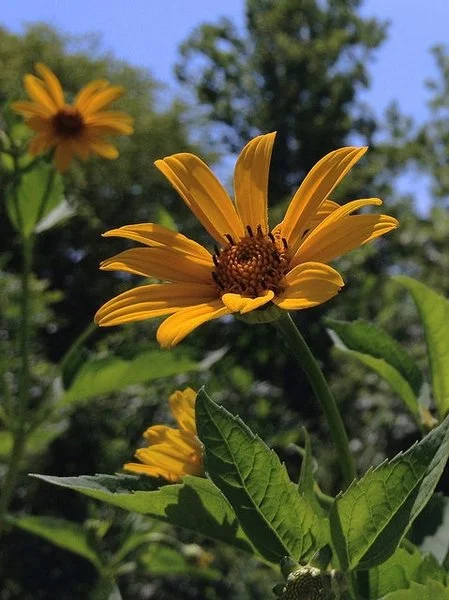 Image 1 of 2
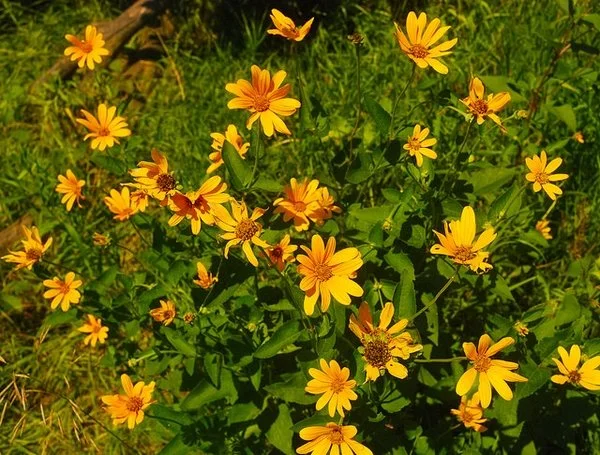 Image 2 of 2