Pot Size: 2 quarts
Native Status: Native Cultivar
Description: A Baptisia that blooms in late spring to early summer. Newest flowers open mauve pink and lighten to near white with age. Both flower colors are present on the stem for a beautiful bicolor effect. They will grow 3-4 feet tall with a similar spread in partial shade to full sun. They are tough, long-lived plants that tolerate various conditions from drought, poor soil, dry soil, and erosion. Best grown in full sun. This perennial native may take a couple of seasons to become established but is very long-lived once mature. Avoid disturbing established clumps.
Light Exposure: Full Sun to Part Shade Drought Tolerant : Yes
Soil Moisture: Medium - Moist Salt Tolerant: Yes
Mature Height: 3.5 – 4 ft Deer Resistant: Yes
Mature Width: 3 – 4 ft
Bloom Color/Bloom Time: Pink shades in late spring-early summer
Historical Uses: Baptisia (wild indigo) has significant historical value as a Native American medicinal plant, a colonial-era blue dye source, and a versatile, hardy perennial. It was used to treat infections, wounds, and toothaches, served as a substitute for true indigo dye during the Revolutionary War, and was used by children as rattles. Baptisia australis first documented in America 1629.
Wildlife Values: 'Plum Rosy' False Indigo (Baptisia) offers wildlife value as a sturdy native perennial that provides nectar for bumblebees, native bees, butterflies, and hummingbirds.
👉 For more information visit NC Extension Gardener Plant Toolbox
Pot Size: 2 quarts
Native Status: Native Cultivar
Description: A Baptisia that blooms in late spring to early summer. Newest flowers open mauve pink and lighten to near white with age. Both flower colors are present on the stem for a beautiful bicolor effect. They will grow 3-4 feet tall with a similar spread in partial shade to full sun. They are tough, long-lived plants that tolerate various conditions from drought, poor soil, dry soil, and erosion. Best grown in full sun. This perennial native may take a couple of seasons to become established but is very long-lived once mature. Avoid disturbing established clumps.
Light Exposure: Full Sun to Part Shade Drought Tolerant : Yes
Soil Moisture: Medium - Moist Salt Tolerant: Yes
Mature Height: 3.5 – 4 ft Deer Resistant: Yes
Mature Width: 3 – 4 ft
Bloom Color/Bloom Time: Pink shades in late spring-early summer
Historical Uses: Baptisia (wild indigo) has significant historical value as a Native American medicinal plant, a colonial-era blue dye source, and a versatile, hardy perennial. It was used to treat infections, wounds, and toothaches, served as a substitute for true indigo dye during the Revolutionary War, and was used by children as rattles. Baptisia australis first documented in America 1629.
Wildlife Values: 'Plum Rosy' False Indigo (Baptisia) offers wildlife value as a sturdy native perennial that provides nectar for bumblebees, native bees, butterflies, and hummingbirds.
👉 For more information visit NC Extension Gardener Plant Toolbox
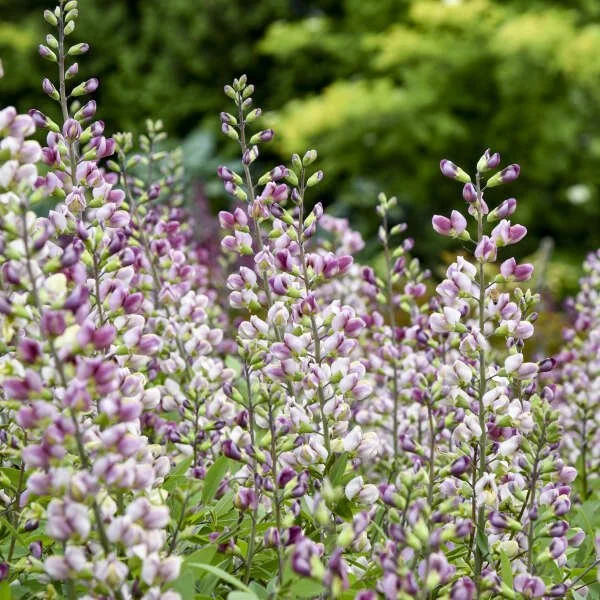 Image 1 of 2
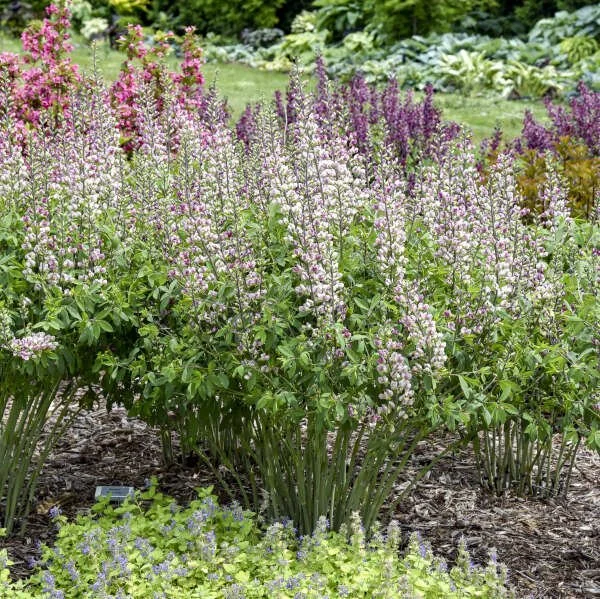 Image 2 of 2