Pot Size: 2 quarts
Native Status: Native Cultivar
Description: Easily grown in average, dry to medium, well-drained soil in full sun to part shade. Flowers best in full sun. An adaptable plant that is tolerant of drought, heat, humidity and poor soil. Divide clumps when they become overcrowded (about every 4 years). Plants usually rebloom without deadheading; however prompt removal of spent flowers improves general appearance. Freely self-seeds if at least some of the seed heads are left in place.
Light Exposure: Full Sun to Part Shade Drought Tolerant : Yes
Soil Moisture: Medium - Dry Salt Tolerant: Yes
Mature Height: 3 – 3.5 ft Deer Resistant: Yes
Mature Width: 1.5 – 2 ft
Bloom Color/Bloom Time: 'Magnus' has broad non-drooping petals of rosy purple surrounding a dark brown cone lasting mid-spring to fall.
Historical Uses: Roots and aerial parts of the native plant were used for pain relief, toothaches, inflammation, and as an antidote for venomous bites. Echinacea purpurea first documented in America 1739.
Wildlife Value: Nectar source for bees and butterflies. Songbirds, especially American Goldfinches, eat the seeds. Dead stems are used by stem-nesting bees.
👉For further information see the Missouri Botanical Garden
👉For more information visit NC Extension Gardener Plant Toolbox
Pot Size: 2 quarts
Native Status: Native Cultivar
Description: Easily grown in average, dry to medium, well-drained soil in full sun to part shade. Flowers best in full sun. An adaptable plant that is tolerant of drought, heat, humidity and poor soil. Divide clumps when they become overcrowded (about every 4 years). Plants usually rebloom without deadheading; however prompt removal of spent flowers improves general appearance. Freely self-seeds if at least some of the seed heads are left in place.
Light Exposure: Full Sun to Part Shade Drought Tolerant : Yes
Soil Moisture: Medium - Dry Salt Tolerant: Yes
Mature Height: 3 – 3.5 ft Deer Resistant: Yes
Mature Width: 1.5 – 2 ft
Bloom Color/Bloom Time: 'Magnus' has broad non-drooping petals of rosy purple surrounding a dark brown cone lasting mid-spring to fall.
Historical Uses: Roots and aerial parts of the native plant were used for pain relief, toothaches, inflammation, and as an antidote for venomous bites. Echinacea purpurea first documented in America 1739.
Wildlife Value: Nectar source for bees and butterflies. Songbirds, especially American Goldfinches, eat the seeds. Dead stems are used by stem-nesting bees.
👉For further information see the Missouri Botanical Garden
👉For more information visit NC Extension Gardener Plant Toolbox
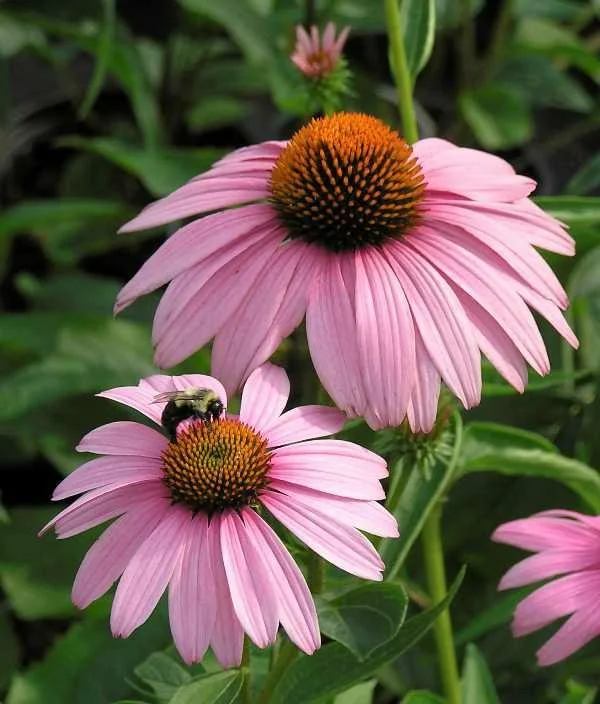 Image 1 of 2
 Image 2 of 2