Pot Size: 2 quarts
Native Status: Native
Description: Purple coneflower (Echinacea purpurea) is an herbaceous perennial in the Asteraceae (daisy) family that is native to Southeastern North Carolina and the central and eastern United States. It may grow 3 to 4 feet tall and produce pinkish-purple flowers that mature in early summer through mid-fall. This plant prefers well-drained, moist loam but is adaptable to various soil types. It is drought tolerant once established and can grow in full sun to partial shade. Several pollinators are attracted to the flower, especially butterflies and native bees. “Native bees nest in the dead, hollow stems, so gardeners are encouraged to cut back dead stems to 12 to 24 inches and allow them to remain standing until they disintegrate on their own. Read more about best practices for stem-nesting bees in this NC Extension publication.
Light Exposure: Full Sun Drought Tolerant : Yes
Soil Moisture: Medium - Moist Salt Tolerant: Yes
Mature Height: 3 – 4 ft Deer Resistant: Yes
Mature Width: 1 – 2 ft
Bloom Color/Bloom Time: Purple blooms lasting mid-spring to fall.
Historical Uses: Roots and aerial parts of the native plant were used for pain relief, toothaches, inflammation, and as an antidote for venomous bites. Echinacea purpurea first documented in America 1739.
Wildlife Value: Nectar source for bees and butterflies. Seed source for songbirds. This plant supports Silvery Checkerspot (Chlosyne nycteis) larvae which has two broods from May-September. The adults feed on nectar from red clover, common milkweed, and dogbane. This plant also supports Wavy-lined Emerald (Synchlora aerata) larvae. Songbirds, especially American goldfinches, eat the seeds. Dead stems are used by stem-nesting bees. Attracts bees and butterflies. Larval host for the Silvery Checkerspot.
👉For more information visit NC Extension Gardener Plant Toolbox
Pot Size: 2 quarts
Native Status: Native
Description: Purple coneflower (Echinacea purpurea) is an herbaceous perennial in the Asteraceae (daisy) family that is native to Southeastern North Carolina and the central and eastern United States. It may grow 3 to 4 feet tall and produce pinkish-purple flowers that mature in early summer through mid-fall. This plant prefers well-drained, moist loam but is adaptable to various soil types. It is drought tolerant once established and can grow in full sun to partial shade. Several pollinators are attracted to the flower, especially butterflies and native bees. “Native bees nest in the dead, hollow stems, so gardeners are encouraged to cut back dead stems to 12 to 24 inches and allow them to remain standing until they disintegrate on their own. Read more about best practices for stem-nesting bees in this NC Extension publication.
Light Exposure: Full Sun Drought Tolerant : Yes
Soil Moisture: Medium - Moist Salt Tolerant: Yes
Mature Height: 3 – 4 ft Deer Resistant: Yes
Mature Width: 1 – 2 ft
Bloom Color/Bloom Time: Purple blooms lasting mid-spring to fall.
Historical Uses: Roots and aerial parts of the native plant were used for pain relief, toothaches, inflammation, and as an antidote for venomous bites. Echinacea purpurea first documented in America 1739.
Wildlife Value: Nectar source for bees and butterflies. Seed source for songbirds. This plant supports Silvery Checkerspot (Chlosyne nycteis) larvae which has two broods from May-September. The adults feed on nectar from red clover, common milkweed, and dogbane. This plant also supports Wavy-lined Emerald (Synchlora aerata) larvae. Songbirds, especially American goldfinches, eat the seeds. Dead stems are used by stem-nesting bees. Attracts bees and butterflies. Larval host for the Silvery Checkerspot.
👉For more information visit NC Extension Gardener Plant Toolbox
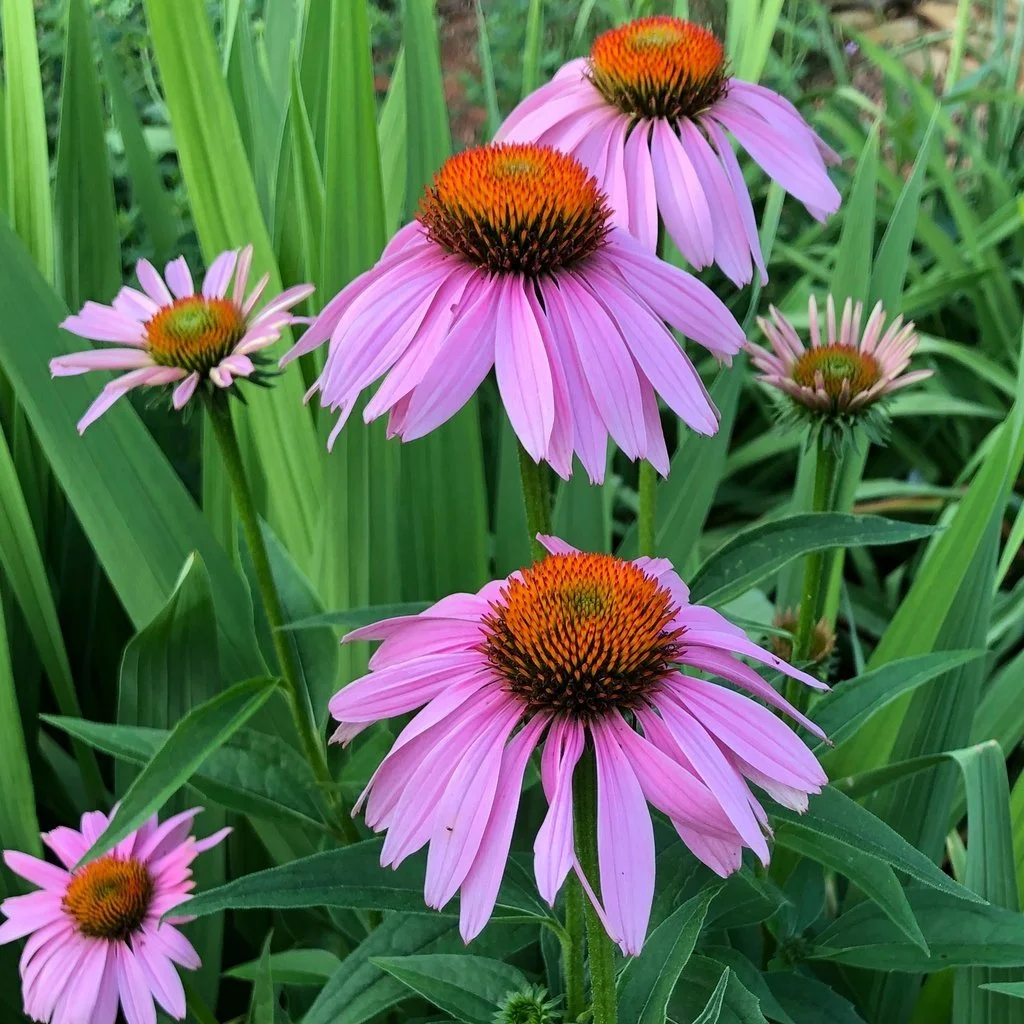 Image 1 of 2
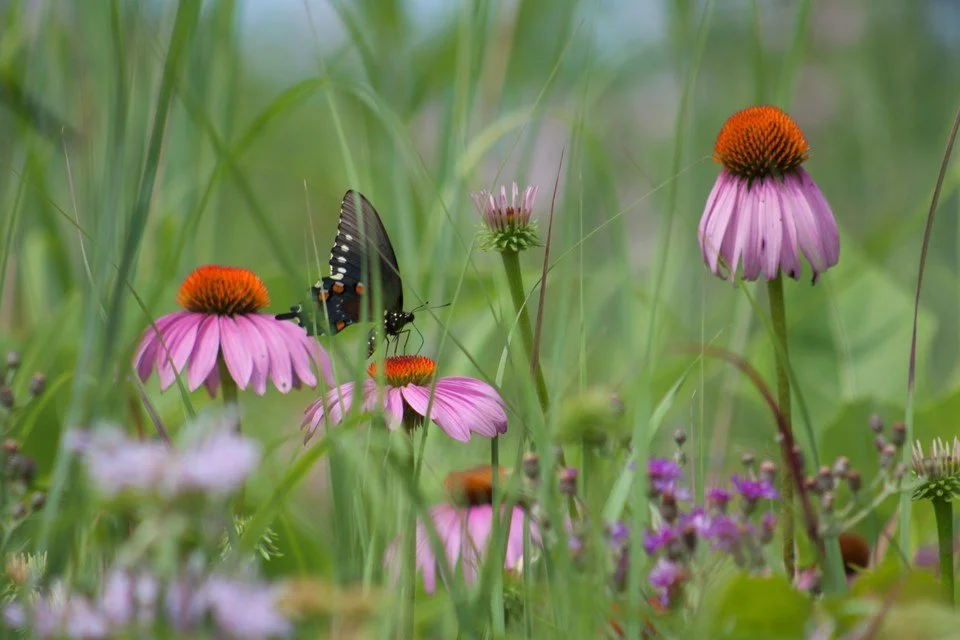 Image 2 of 2