Pot Size: 2 quarts
Native Status: Native
Description: Butterfly weed is a tuberous-rooted, native, herbaceous perennial. The plant is easily grown in average, dry to medium, well-drained soil in full sun. It is drought-tolerant, moderately salt-tolerant, and does well in poor, dry soils. Mature plants may freely self-seed in the landscape if seed pods (follicles) are not removed before they split open. Butterfly weed does not transplant well due to its deep taproot and is probably best left undisturbed once established.
Light Exposure: Full Sun to Part Shade Drought Tolerant : Yes
Soil Moisture: Medium - Moist Salt Tolerant: Yes
Mature Height: 1 – 2 ft Deer Resistant: Yes
Mature Width: 1 – 1.5 ft
Blooms Color/Bloom Time: Orange blooms lasting mid-spring to fall.
Historical Uses: Plant was historically used by Indigenous peoples and early American settlers primarily for respiratory ailments, including pneumonia and bronchitis, as well as for treating wounds, swellings, and colic. The roots were ingested for medicinal benefits, while stems provided fibers for textiles and rope. First documented in America 1629.
Wildlife Values: This pollinator plant is a nectar source for many butterflies and insect pollinators. The plant is a larval host plant for monarch (which appear in the spring and summer and may have one to three broods in the north and four to six broods in the south), gray hairstreak, queen, and milkweed tussock moth caterpillars.
For more information visit NC Extension Gardener Plant Toolbox
Pot Size: 2 quarts
Native Status: Native
Description: Butterfly weed is a tuberous-rooted, native, herbaceous perennial. The plant is easily grown in average, dry to medium, well-drained soil in full sun. It is drought-tolerant, moderately salt-tolerant, and does well in poor, dry soils. Mature plants may freely self-seed in the landscape if seed pods (follicles) are not removed before they split open. Butterfly weed does not transplant well due to its deep taproot and is probably best left undisturbed once established.
Light Exposure: Full Sun to Part Shade Drought Tolerant : Yes
Soil Moisture: Medium - Moist Salt Tolerant: Yes
Mature Height: 1 – 2 ft Deer Resistant: Yes
Mature Width: 1 – 1.5 ft
Blooms Color/Bloom Time: Orange blooms lasting mid-spring to fall.
Historical Uses: Plant was historically used by Indigenous peoples and early American settlers primarily for respiratory ailments, including pneumonia and bronchitis, as well as for treating wounds, swellings, and colic. The roots were ingested for medicinal benefits, while stems provided fibers for textiles and rope. First documented in America 1629.
Wildlife Values: This pollinator plant is a nectar source for many butterflies and insect pollinators. The plant is a larval host plant for monarch (which appear in the spring and summer and may have one to three broods in the north and four to six broods in the south), gray hairstreak, queen, and milkweed tussock moth caterpillars.
For more information visit NC Extension Gardener Plant Toolbox
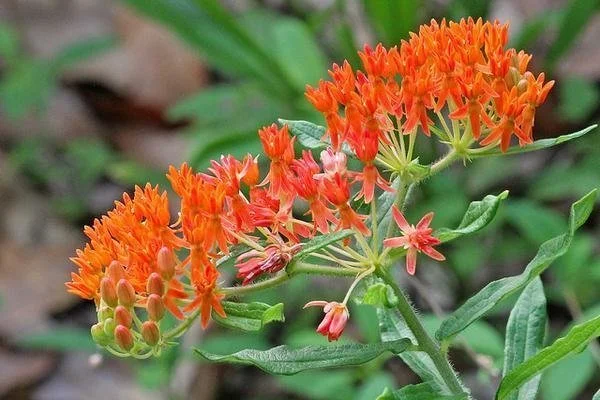 Image 1 of 3
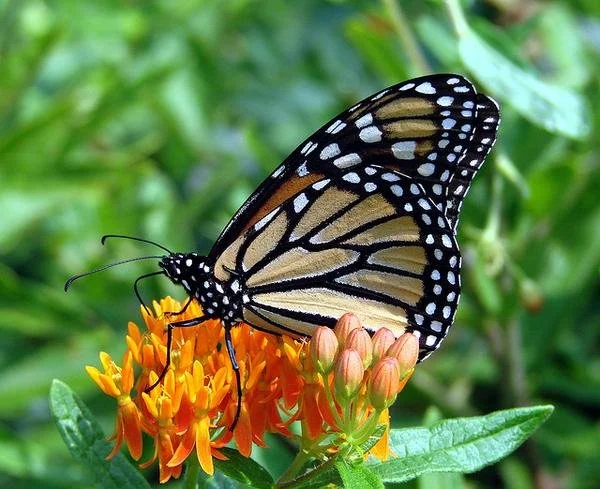 Image 2 of 3
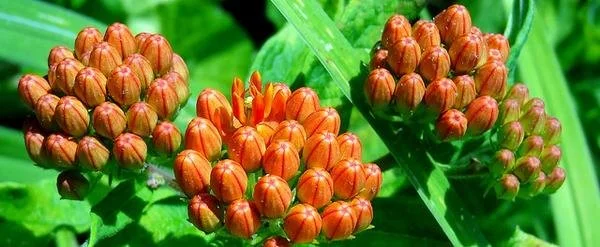 Image 3 of 3