Pot Size: 1 quart
Native Status: Native Cultivar
Description: 'Prairie Glow' features a multi-branched growth habit and a profusion of bicolor blooms from mid-summer into fall. Mature plants will reach up to 4' tall with a 3' spread. The branching stems are topped with 2" wide blooms with bronze ray florets tipped with golden yellow surrounding a dark brown center cone of fertile florets. Easily grown in average, moist, well-drained soils in full sun. Tolerates light shade, but plants may need support if grown in too much shade. Tolerates heat, some drought and a somewhat wide range of soils. Its multi-branching habit provides dense flower cover, more so than the straight species, and its late blooming time, starting in July and flowering right through to October, makes this a valuable pollinator plant.
Light Exposure: Full Sun Drought Tolerant: Yes
Soil Moisture: Medium Salt Tolerant: Yes
Mature Height: 3 – 4 ft Deer Resistant: Yes
Mature Width: 2 – 3 ft
Bloom Color/Bloom Time: Blooms a bi-color pattern of gold and bronze from mid-summer to fall.
Historical Uses: The roots were used in a tea or infusion to treat cold symptoms, dropsy (edema), and intestinal worms in children. A wash made from the plant was applied to treat snakebites, sores, swellings, and burns. Historically, Rudbeckia species are associated with encouragement and motivation. Rudbeckia triloba first documented 1768 in America.
Wildlife Values: The plant attracts a wide variety of native bees, butterflies, and beneficial insects, making it excellent for increasing biodiversity. Larval Host for the caterpillars of the Silvery Checkerspot (Chlosyne nycteis) and the Wavy-lined Emerald moth (Synchlora aerata).In late fall and winter, the seeds on the spent flower heads are a favored, high-energy food source for songbirds.
👉 For more information visit NC Extension Gardener Plant Toolbox
Pot Size: 1 quart
Native Status: Native Cultivar
Description: 'Prairie Glow' features a multi-branched growth habit and a profusion of bicolor blooms from mid-summer into fall. Mature plants will reach up to 4' tall with a 3' spread. The branching stems are topped with 2" wide blooms with bronze ray florets tipped with golden yellow surrounding a dark brown center cone of fertile florets. Easily grown in average, moist, well-drained soils in full sun. Tolerates light shade, but plants may need support if grown in too much shade. Tolerates heat, some drought and a somewhat wide range of soils. Its multi-branching habit provides dense flower cover, more so than the straight species, and its late blooming time, starting in July and flowering right through to October, makes this a valuable pollinator plant.
Light Exposure: Full Sun Drought Tolerant: Yes
Soil Moisture: Medium Salt Tolerant: Yes
Mature Height: 3 – 4 ft Deer Resistant: Yes
Mature Width: 2 – 3 ft
Bloom Color/Bloom Time: Blooms a bi-color pattern of gold and bronze from mid-summer to fall.
Historical Uses: The roots were used in a tea or infusion to treat cold symptoms, dropsy (edema), and intestinal worms in children. A wash made from the plant was applied to treat snakebites, sores, swellings, and burns. Historically, Rudbeckia species are associated with encouragement and motivation. Rudbeckia triloba first documented 1768 in America.
Wildlife Values: The plant attracts a wide variety of native bees, butterflies, and beneficial insects, making it excellent for increasing biodiversity. Larval Host for the caterpillars of the Silvery Checkerspot (Chlosyne nycteis) and the Wavy-lined Emerald moth (Synchlora aerata).In late fall and winter, the seeds on the spent flower heads are a favored, high-energy food source for songbirds.
👉 For more information visit NC Extension Gardener Plant Toolbox

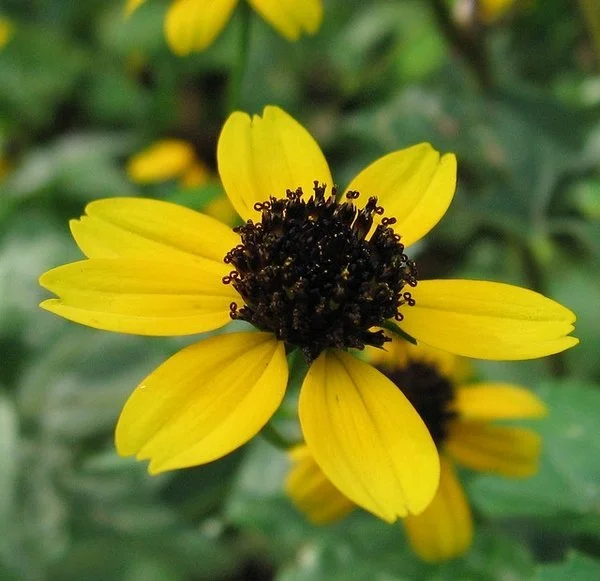 Image 1 of 3
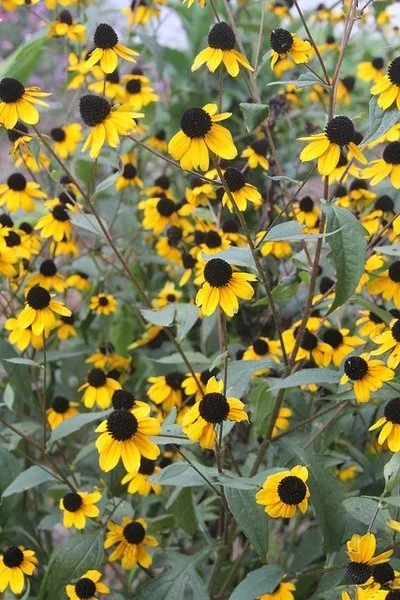 Image 2 of 3
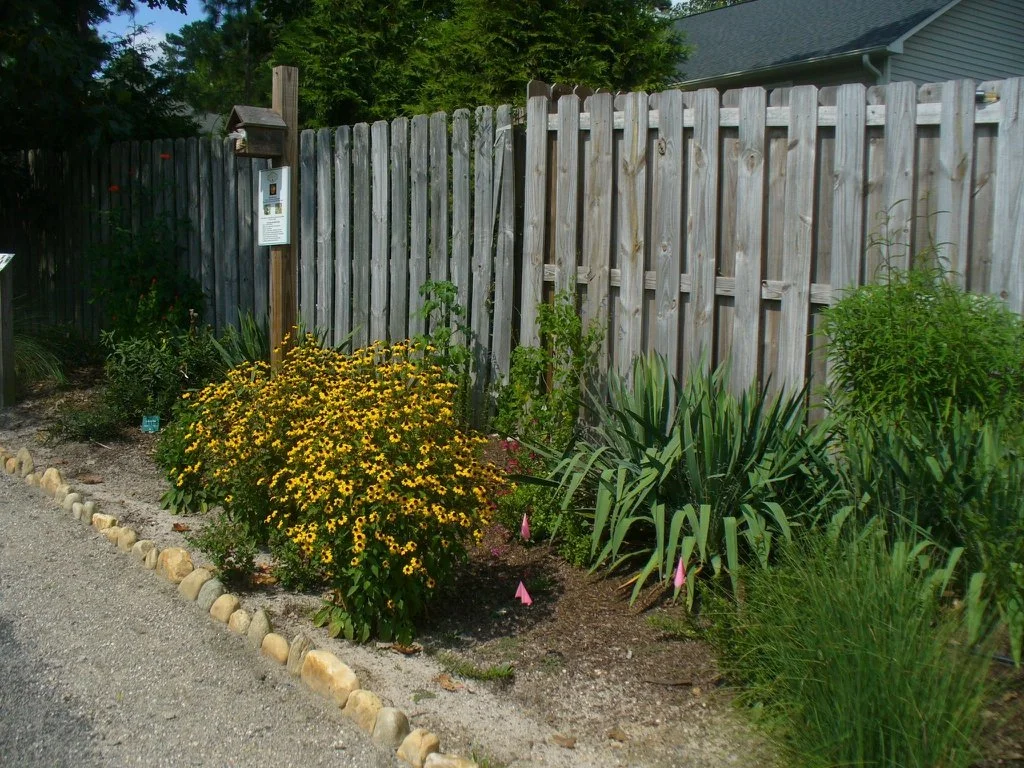 Image 3 of 3