Pot Size: 2 quarts
Native Status: Native
Description: Blue vervain is a native wildflower that spreads slowly through rhizomes and self-seeding. It can grow in disturbed sites and is commonly found in moist meadows, thickets, pastures, riversides, marshes, ditches, and river-bottom prairies. In NC it is found in only a few counties of the coastal, Piedmont and mountain areas. The purple flowers occur in a candelabra-shaped panicle and are a high-value nectar plant with a long bloom season. Blooms open bottom to top with only a few open at one time in mid to late summer. Plant in full sun to partial shade in average medium to wet soils and pinch the tops to encourage branching and a bushier growth habit. Drought tolerant once established.
Light Exposure: Full Sun to Partial Shade Drought Tolerant: Yes
Soil Moisture: Medium to Wet Salt Tolerant: Moderate
Mature Height: 2 – 5 ft Deer Resistant: Yes
Mature Width: 1 – 2.5 ft
Bloom Color/Bloom Time: Blooms blue from July-September.
Historical Uses: It has been used for many years as a medicinal herb for treating convalescents and people suffering from depression, headaches, jaundice, cramps, coughs and fevers. Externally, it has been applied to wounds, ulcers and acne. Swamp vervain can, however, interfere with blood pressure medication and hormone therapy, and large doses cause vomiting and diarrhea. First documented 1753 in America.
Wildlife Values: Cardinals, sparrows, and juncos eat the seeds. Cottontail rabbits eat the foliage, however, most mammals avoid its bitter taste. Larval host plant for verbena moth and the common buckeye butterfly. Specialist pollinator is the verbena bee (a specialist pollinator). In addition, the thread-waisted wasp, bee flies, thick-headed flies and golden soldier beetle are also known to all visit blue vervain.
👉 For more information visit NC Extension Gardener Plant Toolbox
Pot Size: 2 quarts
Native Status: Native
Description: Blue vervain is a native wildflower that spreads slowly through rhizomes and self-seeding. It can grow in disturbed sites and is commonly found in moist meadows, thickets, pastures, riversides, marshes, ditches, and river-bottom prairies. In NC it is found in only a few counties of the coastal, Piedmont and mountain areas. The purple flowers occur in a candelabra-shaped panicle and are a high-value nectar plant with a long bloom season. Blooms open bottom to top with only a few open at one time in mid to late summer. Plant in full sun to partial shade in average medium to wet soils and pinch the tops to encourage branching and a bushier growth habit. Drought tolerant once established.
Light Exposure: Full Sun to Partial Shade Drought Tolerant: Yes
Soil Moisture: Medium to Wet Salt Tolerant: Moderate
Mature Height: 2 – 5 ft Deer Resistant: Yes
Mature Width: 1 – 2.5 ft
Bloom Color/Bloom Time: Blooms blue from July-September.
Historical Uses: It has been used for many years as a medicinal herb for treating convalescents and people suffering from depression, headaches, jaundice, cramps, coughs and fevers. Externally, it has been applied to wounds, ulcers and acne. Swamp vervain can, however, interfere with blood pressure medication and hormone therapy, and large doses cause vomiting and diarrhea. First documented 1753 in America.
Wildlife Values: Cardinals, sparrows, and juncos eat the seeds. Cottontail rabbits eat the foliage, however, most mammals avoid its bitter taste. Larval host plant for verbena moth and the common buckeye butterfly. Specialist pollinator is the verbena bee (a specialist pollinator). In addition, the thread-waisted wasp, bee flies, thick-headed flies and golden soldier beetle are also known to all visit blue vervain.
👉 For more information visit NC Extension Gardener Plant Toolbox
 Image 1 of 2
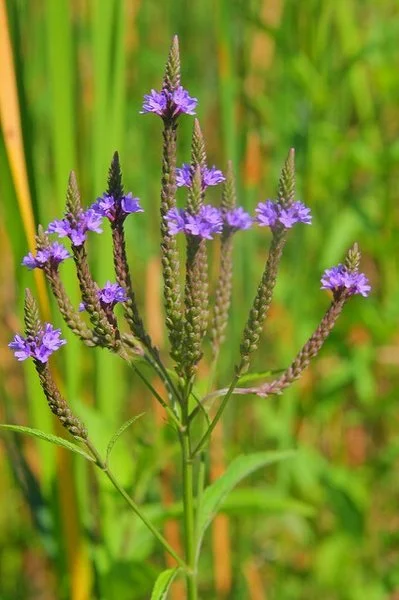 Image 2 of 2