
 Image 1 of 2
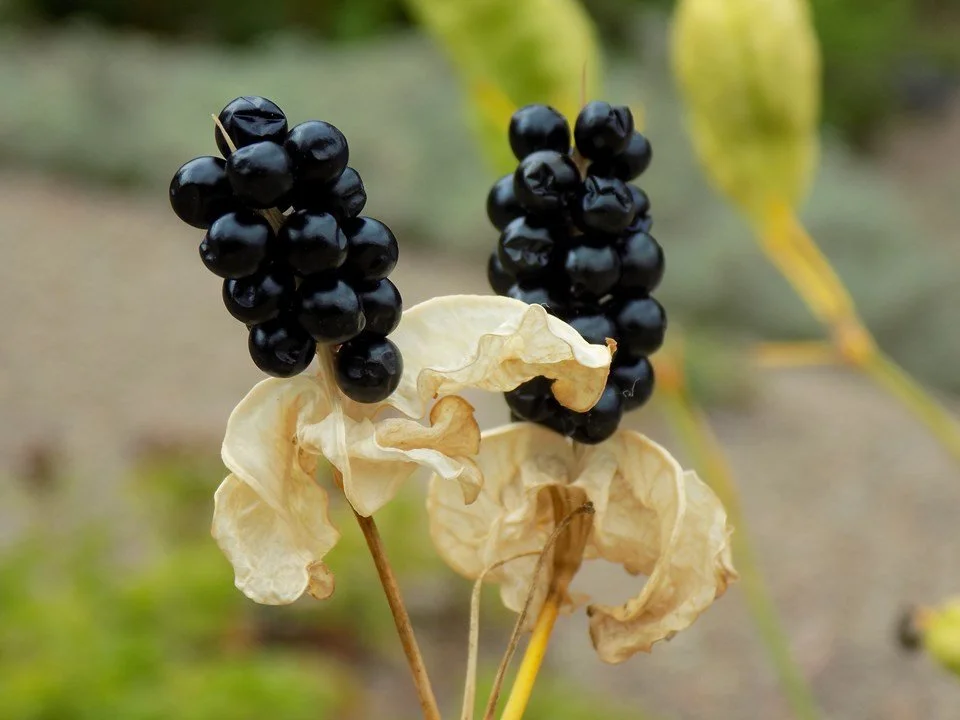 Image 2 of 2
Pot Size: 1 Quart
Native Status: Non-Native
Description: Blackberry lily is a rhizomatous perennial in the Iridaceae (iris) family and is native to Asia. It has iris-like leaves but the flowers resemble a lily and the fruit splits open to reveal a cluster of blackberry like seeds. The orange-spotted flowers appear in sprays of 3-12 in late summer for several weeks. Plant is disease resistant and drought tolerant once established. The flowers are followed by pear-shaped seed capsules that fade from green to tan. These eventually open to reveal the round, shiny black seeds arranged in clusters resembling large blackberries that give rise to the common name. The seeds remain on the stalks for several months. The seed heads offer good winter interest and forage for wildlife.
Light Exposure: Full Sun/Partial Shade Drought Tolerant : Yes
Soil Moisture: Moist Well drained soil Salt Tolerant: No
Mature Height: 2 ft – 4 ft Deer Resistant: No
Mature Width: 9 inch – 2 ft
Bloom Color/Bloom Time: Blooms are orange with red spots and appear during July and August.
Historical Uses: Has a history of medicinal uses, particularly in Chinese medicine to treat throat infections, coughs, and lung-related ailments.
Wildlife Values: This pollinator plantis a nectar source for pollinators and a potential food source for birds. It attracts bees, butterflies, and hummingbirds during its summer blooming period. In late summer and winter, the dry seed pods can attract songbirds like finches.
👉 For more information visit NC Extension Gardener Plant Toolbox
The information provided here is for educational and informational purposes only and is not intended as medical advice. Medicinal plants can have serious side effects and interactions with medications. Consult your healthcare provider before using any herbal remedies, as you are responsible for your own health decisions.
Photo Credits:
1- 'Flower Close-up (Durham County, NC)-Late Summer Andrea Laine CC BY-NC 4.0
2- Blackberry Lily Courtesy Missouri Botanical Garden PlantFinder
Pot Size: 1 Quart
Native Status: Non-Native
Description: Blackberry lily is a rhizomatous perennial in the Iridaceae (iris) family and is native to Asia. It has iris-like leaves but the flowers resemble a lily and the fruit splits open to reveal a cluster of blackberry like seeds. The orange-spotted flowers appear in sprays of 3-12 in late summer for several weeks. Plant is disease resistant and drought tolerant once established. The flowers are followed by pear-shaped seed capsules that fade from green to tan. These eventually open to reveal the round, shiny black seeds arranged in clusters resembling large blackberries that give rise to the common name. The seeds remain on the stalks for several months. The seed heads offer good winter interest and forage for wildlife.
Light Exposure: Full Sun/Partial Shade Drought Tolerant : Yes
Soil Moisture: Moist Well drained soil Salt Tolerant: No
Mature Height: 2 ft – 4 ft Deer Resistant: No
Mature Width: 9 inch – 2 ft
Bloom Color/Bloom Time: Blooms are orange with red spots and appear during July and August.
Historical Uses: Has a history of medicinal uses, particularly in Chinese medicine to treat throat infections, coughs, and lung-related ailments.
Wildlife Values: This pollinator plantis a nectar source for pollinators and a potential food source for birds. It attracts bees, butterflies, and hummingbirds during its summer blooming period. In late summer and winter, the dry seed pods can attract songbirds like finches.
👉 For more information visit NC Extension Gardener Plant Toolbox
The information provided here is for educational and informational purposes only and is not intended as medical advice. Medicinal plants can have serious side effects and interactions with medications. Consult your healthcare provider before using any herbal remedies, as you are responsible for your own health decisions.
Photo Credits:
1- 'Flower Close-up (Durham County, NC)-Late Summer Andrea Laine CC BY-NC 4.0
2- Blackberry Lily Courtesy Missouri Botanical Garden PlantFinder