Pot Size: 1 quart
Native Status: Native Cultivar
Description: This herbaceous perennial has a clumping habit with erect stems that reach a height of 18 to 24 inches. The plant has bold dark green foliage, and the flower has rich yellow petal rays with a dark brown center disk. It is a nonstop show of flowers from mid-summer until the first frosts of fall. Performs best in full sun and moist, well-drained soils in hardiness zones 3-9. It is tolerant of partial shade and once established it will become more drought tolerant. To prevent foliar disease good air circulation is needed, particularly in humid climates. Deadheading spent blooms will promote reblooming throughout the season. 'Goldsturm' is easy to grow and requires very little maintenance. The plant is more compact than other species and has large flowers measuring up to 4 inches in diameter. Butterflies and bees are attracted to the blooms. For more information visit
Light Exposure: Full Sun Drought Tolerant : Yes
Soil Moisture: Medium – Dry Salt Tolerant: No
Mature Height: 1.5 - 2 ft Deer Resistant: Yes
Mature Width: 1 - 2 ft
Bloom Color/Bloom Time: Blooms dark gold with black centers from June through September.
Historical Uses: The plant was used to create root infusions for treating parasitic worms, colds, and earaches, while its boiled roots were used for snake bites, sores, and swelling. Historically, Rudbeckia species are associated with encouragement and motivation. Rudbeckia fulgida first documented 1768 in America.
Wildlife Values: High-value nectar for bees, butterflies, and beneficial insects from mid-to-late summer. It serves as a larval host for caterpillars, such as the Silvery Checkerspot, and its dried seed heads offer crucial fall/winter food for birds, particularly goldfinches.
👉 For more information visit NC Extension Gardener Plant Toolbox
Pot Size: 1 quart
Native Status: Native Cultivar
Description: This herbaceous perennial has a clumping habit with erect stems that reach a height of 18 to 24 inches. The plant has bold dark green foliage, and the flower has rich yellow petal rays with a dark brown center disk. It is a nonstop show of flowers from mid-summer until the first frosts of fall. Performs best in full sun and moist, well-drained soils in hardiness zones 3-9. It is tolerant of partial shade and once established it will become more drought tolerant. To prevent foliar disease good air circulation is needed, particularly in humid climates. Deadheading spent blooms will promote reblooming throughout the season. 'Goldsturm' is easy to grow and requires very little maintenance. The plant is more compact than other species and has large flowers measuring up to 4 inches in diameter. Butterflies and bees are attracted to the blooms. For more information visit
Light Exposure: Full Sun Drought Tolerant : Yes
Soil Moisture: Medium – Dry Salt Tolerant: No
Mature Height: 1.5 - 2 ft Deer Resistant: Yes
Mature Width: 1 - 2 ft
Bloom Color/Bloom Time: Blooms dark gold with black centers from June through September.
Historical Uses: The plant was used to create root infusions for treating parasitic worms, colds, and earaches, while its boiled roots were used for snake bites, sores, and swelling. Historically, Rudbeckia species are associated with encouragement and motivation. Rudbeckia fulgida first documented 1768 in America.
Wildlife Values: High-value nectar for bees, butterflies, and beneficial insects from mid-to-late summer. It serves as a larval host for caterpillars, such as the Silvery Checkerspot, and its dried seed heads offer crucial fall/winter food for birds, particularly goldfinches.
👉 For more information visit NC Extension Gardener Plant Toolbox
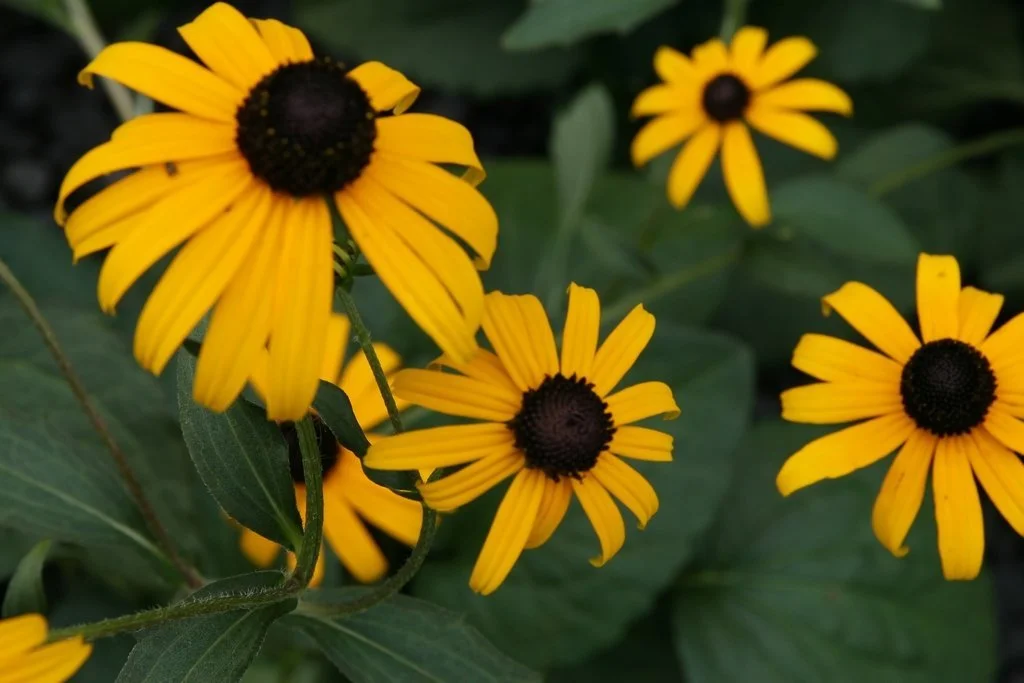 Image 1 of 2
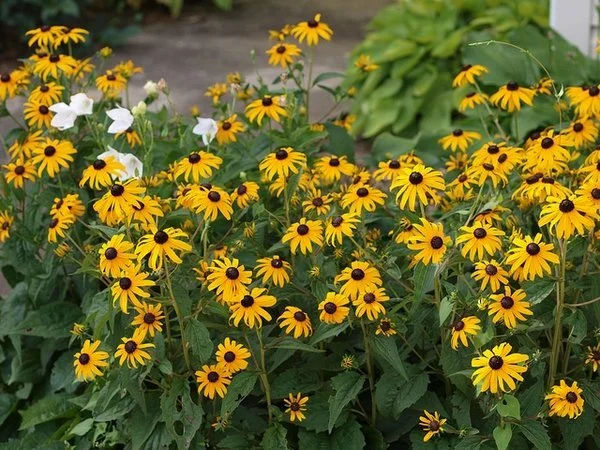 Image 2 of 2