Pot Size: 1 quart
Native Status: Native Cultivar
Description: This plant is a nativar of Monarda didyma and is easily grown in average, medium to wet, moisture retentive soils in full sun to part shade. The leaves have an aroma of mint and basil and can be used to flavor teas. Its tubular, two-lipped, raspberry-red, fragrant flowers are crowded into dense, globular, terminal flowerheads (to 3-4” across) resembling unkempt mop-heads. The flower buds resemble raspberries. Remove spent flowers to improve plant appearance and to prolong bloom. Divide clumps every 3-4 years to prevent overcrowding and to control mildly spreading tendencies (slowly spreads by rhizomes). Provide plants with good air circulation to help combat fungal leaf diseases.
Light Exposure: Full Sun to Part Shade Drought Tolerant : No
Soil Moisture: Medium to Wet Salt Tolerant: No
Mature Height: 3 – 4 ft Deer Resistant: Yes
Mature Width: 2 – 3 ft
Bloom Color/Bloom Time: Blooms raspberry red from late June through August.
Historical Uses: Monarda didyma was used as a poultice for skin infections, wounds, and stings, hence the name "bee balm". It was also brewed as tea to treat colds, influenza, fever, sore throats, and coughs. Colonists used the leaves as a substitute for imported black tea, notably after the Boston Tea Party. As a digestive aid it was also used to treat stomach aches, nausea, flatulence, and diarrhea.
Wildlife Values: This pollinator plant attracts bees, butterflies, and hummingbirds.
👉 For more information visit NC Extension Gardener Plant Toolbox
Pot Size: 1 quart
Native Status: Native Cultivar
Description: This plant is a nativar of Monarda didyma and is easily grown in average, medium to wet, moisture retentive soils in full sun to part shade. The leaves have an aroma of mint and basil and can be used to flavor teas. Its tubular, two-lipped, raspberry-red, fragrant flowers are crowded into dense, globular, terminal flowerheads (to 3-4” across) resembling unkempt mop-heads. The flower buds resemble raspberries. Remove spent flowers to improve plant appearance and to prolong bloom. Divide clumps every 3-4 years to prevent overcrowding and to control mildly spreading tendencies (slowly spreads by rhizomes). Provide plants with good air circulation to help combat fungal leaf diseases.
Light Exposure: Full Sun to Part Shade Drought Tolerant : No
Soil Moisture: Medium to Wet Salt Tolerant: No
Mature Height: 3 – 4 ft Deer Resistant: Yes
Mature Width: 2 – 3 ft
Bloom Color/Bloom Time: Blooms raspberry red from late June through August.
Historical Uses: Monarda didyma was used as a poultice for skin infections, wounds, and stings, hence the name "bee balm". It was also brewed as tea to treat colds, influenza, fever, sore throats, and coughs. Colonists used the leaves as a substitute for imported black tea, notably after the Boston Tea Party. As a digestive aid it was also used to treat stomach aches, nausea, flatulence, and diarrhea.
Wildlife Values: This pollinator plant attracts bees, butterflies, and hummingbirds.
👉 For more information visit NC Extension Gardener Plant Toolbox
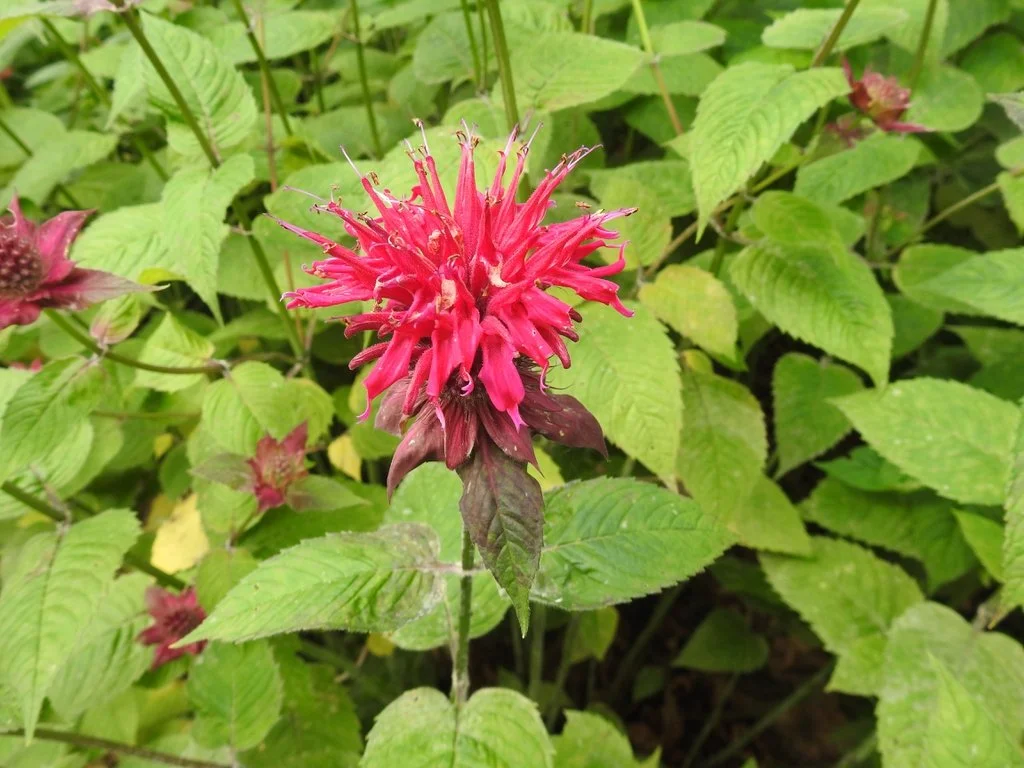 Image 1 of 2
 Image 2 of 2