
Cuban Oregano (Plectranthus amboinicus)
Despite its common names that include the words borage, mint, thyme and oregano, Cuban Oregano is not a borage, mint, thyme or even oregano (although they are all members of the same family – Lamiaceae).
Some people call it "Vicks plant" because its camphor and menthol aroma -- particularly strong when the leaves are crushed -- is similar to the cough salve.
The aromatic leaves have a velvety texture. Growing 12- to 18-in. tall and 12- to 24-in. wide, P. amboinicus prefers a hot and dry location. Differing from true oregano, Cuban Oregano does best in a location that provides some protection from the hot summer sun because full sun can burn the leaves. This is an ideal herb to grow in partial shade. P. amboinicus requires well-drained soil, only occasional irrigation (if any), and little other maintenance.
This plant is frost-tender, so gardeners in cooler climates might prefer to plant it in pots that can be moved indoors when temperatures drop. Like mint, to which it is related, it has small, insignificant flowers and doesn’t set seed. It can be propagated by division or stem cuttings. It attracts pollinators and has medicinal and culinary uses. Spider mites and mealybugs can damage this plant.
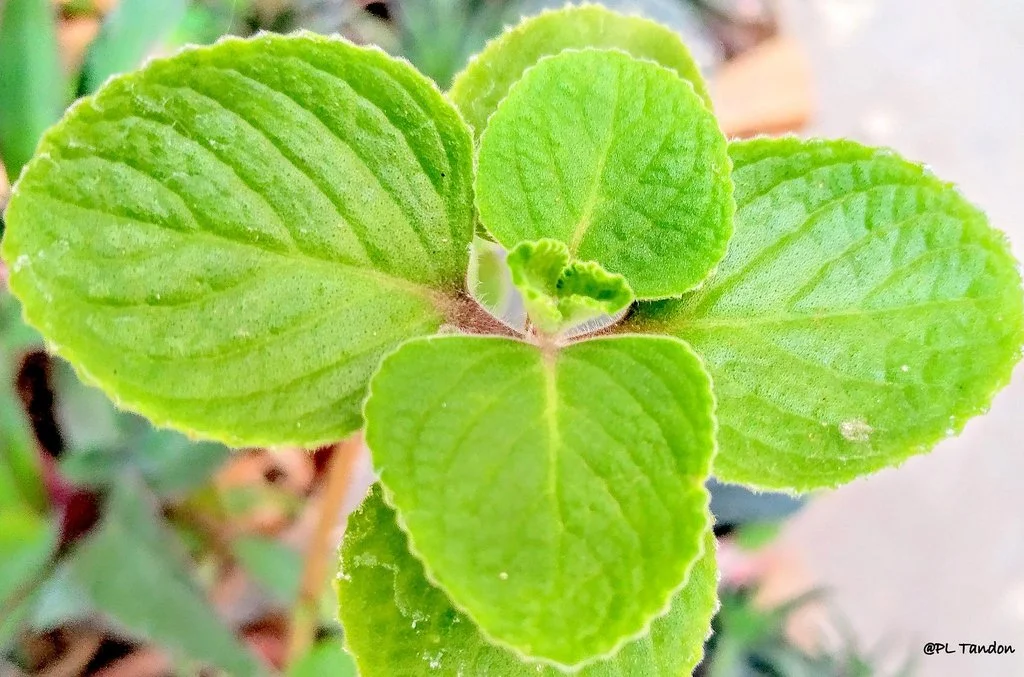
Foliage close up | PL Tandon | CC BY-NC-SA 2.0
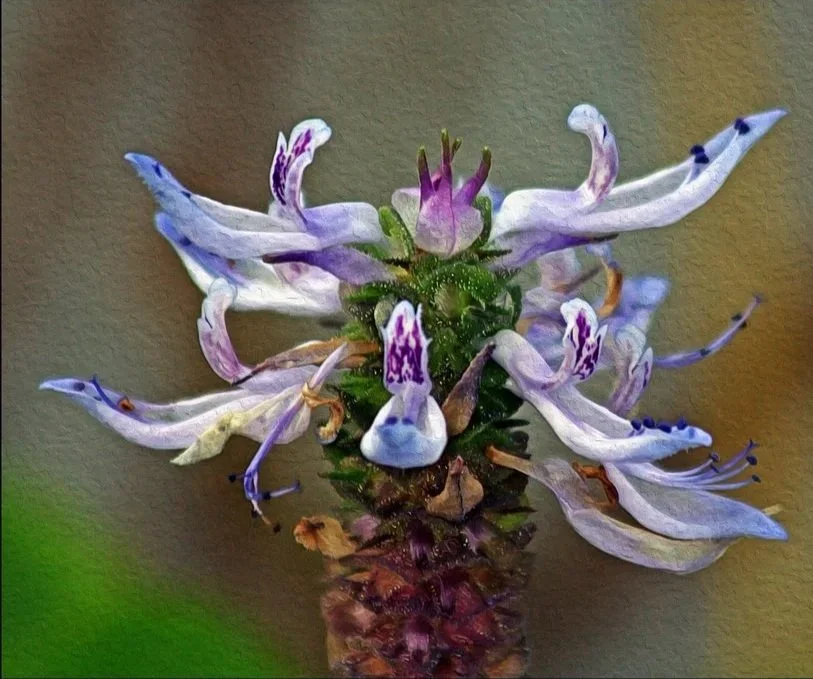
Plectranthus amboinicus | Flower close up | Manuel M.V. | CC BY 2.0

Variegated foliage | David J. Stang | CC BY-SA 4.0
By Kathryn Copley, Extension Master Gardener℠ Volunteer, Brunswick County, NC
For more information on gardening in Brunswick County, please call the Brunswick County Cooperative Extension Office, 910.253.2610.
SOURCES:
Plectranthus amboinicus | North Carolina Extension Gardener Plant Toolbox
Cuban Oregano | IFAS Extension, University of Florida
Fact sheet: Cuban Oregano | UF-IFAS Blogs, University of Florida