
Chinese Snowball Viburnum (Viburnum macrocephalum)
Would you love snowballs in spring and, in some areas, a second flush in fall? It is possible with this popular deciduous flowering shrub. It has the largest flowers of the snow-ball viburnums, with their spectacular 6- to 8-inch dome-shaped flower clusters.

Viburnum macrocephalum form | Jim Robbins | CC BY-NC-ND 4.0
The infertile, fragrance-free flowers emerge apple green and mature as white inflorescences. Eventually, the flowers become light brown, persisting on the plant for several weeks. The flowers are commonly used, both fresh and dried, in floral arrangements.
Chinese Snowball Viburnum is hardy from zones 6 through 9, with a medium growth rate and medium maintenance requirements. It prefers moist, acidic, well-drained soils. It will grow in well-drained clay, loam (silt), and sand.
Grow it in full sun or partial shade (2 to 6 hours of sun-light). Flowers are most abundant in full sun, but afternoon or dappled shade will help prevent summer wilting.
Plants will not tolerate drought.
Chinese Snowball Viburnum grows 6- to 25-ft. tall and 20-ft. wide with a rounded vase-shaped form. It is tolerant of pruning. The plant flowers on old wood, so don't prune until after it flowers. Then, prune it as necessary to thin out old branches, open up the shrub, reduce height, or develop a better shape. Rejuvenate old plants by cutting them to the ground. They may not resume flowering, though, for two years after severe pruning.
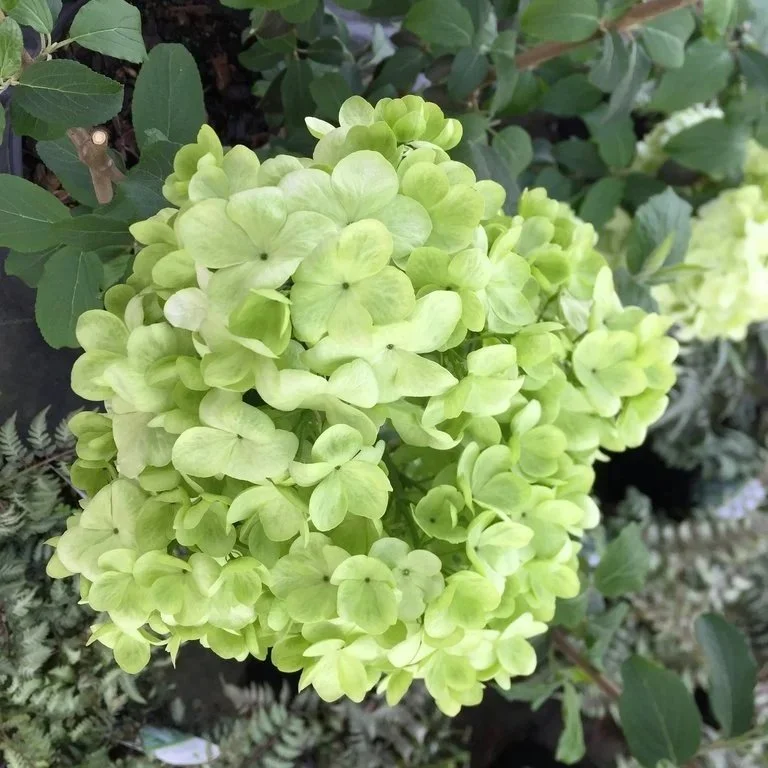
Viburnum macrocephalum. Immature flower cluster | Jim Robbins | CC BY-NC-ND 4.0
Use this plant as a specimen, in groups, for borders, or for informal hedges. It looks good as a background plant in the perennial border or woodland garden. There, it disappears into the winter landscape, then pops to the foreground in spring to become a landscape focal point.
This plant has no serious insect or disease problems. It is mildly resistant to deer. It attracts butterflies. The Clemson Cooperative Extension Home and Garden Information Center has a factsheet on common pests and diseases.
By Kathryn Copley, Extension Master Gardener℠ Volunteer, Brunswick County, NC
For more information on gardening in Brunswick County, please call the Brunswick County Cooperative Extension Office, 910.253.2610.
SOURCES:
Viburnum macrocephalum | North Carolina Extension Gardener Plant Toolbox
Viburnum | Clemson University Cooperative Extension, Home and Garden Information Center
Georgia Gold Medal winner offers warm ‘snowballs’ | University of Georgia, College of Agricultural and Environmental Sciences